

November 10-16, 2025
Fiction | Nonfiction | Memoir | Poetry | Screenwriting | Top Authors | Literary Agents
Master Classes:
November 10th-13th, 2025
Conference:
November 14th-16th, 2025


Write your book. Learn from bestselling authors. Meet agents and publishers.
All on beautiful Kauai.
MEET OUR FACULTY
Authors:




Poetry:

Film and TV:


Literary Agents:





Publishing:



MORNING MASTER CLASSES
4 Days | Monday 11/10 – Thursday 11/13 2025 | 9:00am to 12:00
How to Write a Great Short Story:
Cultivating Empathy, Voice, and Character in Short Fiction
with Heidi Pitlor & Curtis Sittenfeld
Join the guest editor and series editor of the 2022 volume of perennial bestseller, The Best American Short Stories, for a rare look inside a beloved American genre. Short stories are often the chosen form of new fiction writers. Increasingly, film scouts and content providers are looking to short stories for potential adaptation and publication. Mastering the short form may be your goal, or may be a useful skill in learning to write and revise novels. Sittenfeld and Pitlor discuss what they looked for when choosing The Best American Short Stories, and what all writers can learn from this.
Through discussion, generative exercises, close study of successful short stories, and question and answer sessions, Sittenfeld and Pitlor will guide you toward seeing your own and others’ fiction in a new way. They’ll discuss structure, point of view, narrative distance, characterization, as well as learning to cultivate your individual process and voice as a writer. Every piece you write is different, and must be approached in a different way. Learning to master one story is a great way to learn about your own process as a writer.
Next-Level Writing: Mastering the Craft of Exceptional Storytelling
with Christina Baker Kline, Paula McLain & Meg Wolitzer
Building on the popularity of their introductory “Turning Life into Art,” masterclass, this advanced workshop is designed for experienced writers ready to refine their craft and push creative boundaries. Taught by celebrated authors Meg Wolitzer, Paula McLain, and Christina Baker Kline, this intensive course offers a rare opportunity to earn a deeper understanding of the art of writing.
Through close reading of select texts, in-depth seminar-style discussion of craft and technique, and intensified focus on writing and revising pivotal scenes, participants will explore how to draw inspiration from life and shape it into compelling fiction or memoir. You’ll hone your voice, experiment with narrative structure, and master the balance of mining personal experience while working toward the highest level of craftsmanship and intentionality. Each participant will receive personalized workshop-style feedback in smaller groups, guided by one of the instructors. The course will culminate in a final class where we’ll reflect on lessons learned, share insights, and discuss next steps for each writer’s project.
Participants should be actively working on a manuscript-in-progress, whether fiction or memoir. Previous publication credits are welcome but not required.
Join us to take your writing to the next level, guided by three renowned authors who will inspire, encourage and challenge you.
What Makes the Story Go?
with Rebecca Makkai
In narrative prose, it’s plot — cause and effect, development, change, suspense — that propel us forward. In less narrative prose, we have to rely on other propulsions: lyricism, innovation, surprise, rhythm, revelation, borrowed forms. And, as in every art, it’s helpful to master the traditional forms before you break the rules.
Through short readings and discussions, we’ll look at both the structure of traditional short narratives and also at the wildest formal experimentation being done today. And we’ll talk about how these forms of momentum transfer to longer projects (novels, novellas, memoirs). In this generative class, our own writing prompts will take us in both directions: writing page-turning narrative momentum on the one hand, and playing with form on the other. We’ll focus on arc, on shape, on plot or the lack thereof — asking, in every case, what moves the story along, and how to make it impossible to put down.
Advanced Narrative Design: Keeping Readers Hooked
with Jean Kwok
This will be an advanced version of the class that Jean Kwok offered last year. It will be suitable for both previous and new students. Her existing and previous students may register for it at this time.
Students who have not yet taken a class by Jean are asked to submit a 3 to 5 page excerpt from their writing and a 1 page description of their writing history and dreams (i.e., how long have you been writing, what do you hope to achieve, etc.) to info@kauaiwritersconference.com. Jean will review these before inviting those students to register. This is a class for writers who are serious about publishing a novel with a traditional publisher and building a successful career as a professional author. If you have been rejected by gatekeepers like agents and editors, this class offers ways of strengthening your manuscript. Only writers who are open to questioning, breaking apart and restructuring their existing work should apply. If you are writing for self-fulfillment or as a hobby, this is not the right class for you. There are a limited number of spaces available for this advanced class.
Jean Kwok’s novels consistently hit the sweet spot between literary and commercial fiction. Her award-winning books are taught in schools around the world while hitting the New York Times and international bestseller lists. She often uses material from her own life, transforming sometimes painful experiences into art, and is living her dream of being a full-time, successful author. A gifted, encouraging, and experienced teacher, she is now ready to share her secrets with you in this rare opportunity. She writes:
We’ve all been there. You have a pile of carefully polished pages, yet they don’t seem to cohere. Or you have a sprawling monster of a novel that resists any attempt to tame it. Or maybe it’s always been your dream to write a novel but you have no idea how to get started. We all love to move commas around but often, our work needs larger structural changes to make it as compelling and powerful as possible.
This is a class that looks at different ways to plot and structure a novel, including treatment of character development, themes, setting, voice, and point of view. You don’t need to have a draft of a novel to attend.
Our ultimate goal is to help you find a stronger structure for your novel that could lead to publication.
Defining Your Author Brand
with Lisa Sharkey
Many people have wonderful ideas for their books. But one thing most author hopefuls don’t have is the awareness that every book and every author is a brand. In this class you’ll come to realize that as important as it is to write a great book, it’s equally important to figure out who is going to read your book and where are you going to find your readers?
Lisa Sharkey, senior vice president and director of creative development at HarperCollins for more than 16 years, has helped hundreds of authors hone brand-building skills to grow their audience in both fiction and non-fiction book publishing.
What’s the right social media vertical for you?
How do you generate buzz about your book even before you have sold it?
Should you write the whole book first or should you focus as much on growing your audience as finishing your pages? What kinds of posts attract the most attention from your existing audience, and which posts will introduce you to new audiences who haven’t even heard about you yet?
In addition to publishing dozens of New York Times, bestsellers, Lisa oversaw the creation of a social media marketing programming at HarperCollins with more than 33 million views in just a few short years and has deep knowledge of how to position authors for maximum exposure.
The course will also include one on one attention in front of the class for each attendee as we structure their brand development and help them frame their author platform and profile for maximum exposure.
Killer Characters:
The Art of Creating a Dynamic, Unforgettable Cast in Fiction and Memoir
with Danielle Trussoni
When writing fiction and memoir, we often turn to plot devices to hook readers. But a great story is only possible with magnetic, fully developed and dynamic characters. This is true not only for the protagonist, but the entire cast. From allies to enemies, friends to villains to foils, the people we meet in a book are what keep us turning the pages. In fact, when we think of our favorite stories, it’s always the characters we remember most.
This class is an intensive investigation into the art of creating three-dimensional, unforgettable characters that keep readers engaged from the beginning of a story to the end. It doesn’t matter if you’re writing literary fiction, memoir, crime fiction, a thriller, romance, or fantasy: the depth of your characters will make or break your story. Through discussions, readings, writing prompts, generative writing, and examination of some of the most beloved characters in literature, we will get to the heart of what makes magnetic characters. And how you can create them.
Characters are the source of every aspect of a story—from how readers see the world, to the conflict, the setting and the theme. To this end, this class will explore questions such as: What is the function of character in narrative and what are the various roles that characters play? How does point of view work and which character’s POV is the most effective in your story and why? What is great dialogue? How can dialogue be an effective narrative tool? What is the difference between real people and characters in fiction and memoir? What are some of the most memorable characters in literature and how did they come into existence? How does the writer’s life influence their art and the creation of character? What is the ideal cast for your fiction? How do you create a dynamic balance between character description, action, dialogue and theme?
Using your work in progress, we will create character maps that help you elevate and understand the people in your narrative, define character key roles, explore ways that characters carry plot, and analyze all the ways that the right characters can change your narrative.
Mastering the Scene: Crafting Unforgettable Moments
with David Kirkpatrick
Legendary director John Ford once said, “You need five great scenes to make a great movie.” Kirkpatrick has built his career on this principle, collaborating with writers to craft indelible production-ready moments in their screenplays.
“The scene is the foundation of any movie or play,” says Kirkpatrick. “You’ve got to immerse yourself into the psyche of the actor to create ‘playable’ stories.” In this dynamic four-day workshop, you’ll not only learn how to conceptualize and write compelling scenes, but you’ll also embody them.
Through immersive Scene Labs, participants will bring their scripts or plays to life—acting out their own scenes, exploring iconic moments from award-winning films, and using wardrobe pulled from your suitcase and objects found around the hotel to uncover how simple details can elevate the read.
You’ll delve into the subtle yet powerful “temperature change”—the emotional shift that occurs when an actor enters a scene and exits the scene.
This hands-on approach emphasizes a powerful truth: to truly master a scene, you must play every part. By stepping into the shoes of actors, writers gain invaluable insights into dialogue, pacing, and physical storytelling.
When you leave this workshop, Kirkpatrick’s goal is clear: to equip you with the “secret sauce” of scene-making—ensuring your screenplay isn’t just good on paper, but irresistible to directors, producers, and audiences alike.
Prepare to write, act, refine, and feel your scenes. Prepare to create moments that don’t just sit on the page—they command the stage and screen.
“I never learned so much about writing than at the literary Disneyland David created for all of us in Kauai.” – Playwright
“Embodying the character as I write changed the whole trajectory of my career. I’ve had a script produced and two others optioned since taking David’s workshop.” Screenwriter
Pens Up, Fears Down!
with Sadeqa Johnson & John Searles
Do you have a powerful story inside you just waiting to be told? Are self-doubt and fear holding you back from starting or finishing your novel? Creativity belongs to everyone—this is your moment to bring your ideas to life with expert guidance!
Join bestselling, beloved authors Sadeqa Johnson and John Searles for an energizing, hands-on workshop designed to ignite your creativity, boost your confidence, and transform your raw ideas into a captivating manuscript. Whether you’re working with a first or partial draft, scattered notes, or just a flicker of inspiration, this class will help you deepen your story, elevate your craft, and create a manuscript that agents, publishers, and readers can’t resist.
In a supportive, intimate setting, you’ll learn proven tips on character development, plot, and story structure. Plus, gain practical tools to overcome obstacles, sharpen your skills, and set achievable goals. We’ll also explore the “writer’s mindset” needed to stay disciplined, focused, and motivated on your writing journey.
Your story is waiting—don’t let fear hold you back. Join us and start writing the book you’ve always dreamed of.
Publishing 101 for Writers
with Tom Colgan
There’s never been a better time to be an author. Your options for publication are greater than they’ve ever been. So what’s holding you back?
Over the course of my forty-year publishing career, many authors have complained that they were daunted because they found the whole publishing process to be opaque. They worried that they were “breaking the rules” or unwittingly “stepping on land mines.” Let me explain the entire process to you, from the first time you sit down to write, until your book hits the Times list.
It will be four days of some lecture but much more discussion, demonstration, and participation. Each day we will discuss a different aspect of the process (with some inevitable crossover). Topics will include but not be limited to the below.
Day One—The Author
- How Do I Make My Book Stand Out?
- Plotter or Pantser? Which is Correct? (Spoiler: They both are, but there is one universal method that you must use)
- Three Tricks to Sharpening Your Writing
- The Rules of Writing (Actually, they don’t exist, but there are questions you need to be prepared to answer):
- How long is the book?
- Is it part of a series?
- Does my background bring anything to the table?
- Should I go Indie or Trad? (One does not preclude the other)
Day Two—The Agent
- Looking for an Agent
- Writing the Perfect Query Letter:
- Picking comp titles
- Positioning your book on the shelf
- What to highlight in your background
- Etc.
- Signing with an Agent
- What to Expect in the Agent/Author Relationship
- Submitting to Publishers
- Post-Acquisition Work
Day Three — The Editor
- What Happens When the Book Comes into the Publisher
- What an Editor is Looking For
- Presenting to the Editorial Board
- The Acquisition Process:
- Finding Comp Titles (We don’t use yours)
- Creating a Profit & Loss Statement (We’ll go through one in the class)
- Different kinds of Auctions (We’ll do a mock auction in the class)
- Negotiations between Agent and Editor
- Working with Your Editor on the Manuscript
Day Four — The Publisher
- Scheduling the book
- How to Design the Cover
- The Copyeditor
- Text Design
- The Proofreader
- Publicity and Marketing (What you can expect the publisher to do and what you’ll have to do yourself)
- Sales Distribution (Why are there no copies at my B&N and what can I do about it?)
- The Life Cycle of the Book (What happened to mass market?)
What’s Love Got To Do With It?
with Ali Hazelwood & Lyn Liao Butler
Are you writing a full-length romance novel, or struggling to add a compelling romance subplot in other genres? In this immersive class, Ali Hazelwood, along with Lyn Liao Butler will discuss the following topics: genre conventions, how romance has changed through the years, the exploration of the current state of romance, open and closed-door scenes, and subgenres of romance. Through writing exercises, they will guide you in writing high concept pitches, how to flesh out a setting as well as create characters that a reader will want to see fall in love, and how to create conflict and build tension between the characters using external vs internal conflict, and how to combine them. This class is open to writers of all genres who want to create believable love scenes. Get ready to heat up the pages and give your romance novel or romance subplot its very own happy ending.
AFTERNOON MASTER CLASSES
4 Days | Monday 11/10 – Thursday 11/13 2025 | 1:30 to 4:30pm
Hacking Writing on a Line Level:
A Guide to Elevating Your Story One Word at a Time
with CeCe Lyra
What is the main difference between a book and a movie? Movies have tools such as special effects, actors, lighting, soundtracks (and more!) at their disposal. Authors only have one tool: words. Which is why writers must ensure that their prose shines on the level of the line. It’s not enough to have a great idea or even an outline for a story—you must know how to write it in a way that is compelling to the reader.
The masterclass will cover various aspects of line-level writing into your story, including:
- How to audition every word in your manuscript in a way that feels manageable;
- A practical guide on keeping the reader emotionally invested and curious;
- Striking the balance between overwriting and underwriting;
- How writing on a line level can affect the pace of your story;
- Craft tips on ensuring sentence variety and freshness;
- Weaving in figures of speech, imagery, and symbolism in a way that feels original and effective;
- How to develop and strengthen your voice as an author;
- Effectively writing dialogue;
- How to identify common mistakes related to line-level writing in your own work;
- Revision techniques;
- How to create your own unique resource filled with inspiration on line-level writing; and
- Tips and tricks to identify strong line-level writing in the books you read—so you can be a life-long learner.
Join us for a class filled with actionable tips and tricks on how to elevate your writing on a line level. We’ll have slides with examples from successful books, workshops, and discussions in class.
Starting Your Novel: People, Place and Problem
with Liz Moore & Janelle Brown
This class will move students through one approach to beginning (or reimagining) a novel-length work. For our first three sessions, we’ll look closely at model texts for inspiration on how to establish setting (“place”), how to create vivid characters (“people”), and how to come up with a memorable inciting incident (“problem”) that will give students the foundation they need to write a complete novel. We’ll give live prompts and assignments related to these concepts; students will have time in class to generate text. Toward the end of our third session, we’ll guide students through creating a cohesive novel opening that incorporates all three lessons. During our fourth session, we’ll share, discuss, and begin to revise our work.
The Heart Never Rests: Writing Lyric Poetry
with Tim Seibles
Lyric: 2) a poem of a type that expresses the writer’s emotions
Almost always, we write poems because a feeling has driven us to say something. It seems we can’t help but lead with our hearts. Given this, it’s clear that all poems—narrative, pastoral, political—have lyrical aspects. The emotions fueling the words may be gentle or volcanic, but most often, we write to express exactly how we feel about an idea or event that affects our lives. As poets, however, we want to find language that compels others to feel with us, words that speak meaningfully to the reader. We’ve all been gripped by poems written by someone we’ve never met, sometimes by poems written centuries before we were born.
But how is it done? How can we write poems that touch someone whose life may be utterly separate from our own? In this workshop, we will read emotively rich poems and, using writing prompts, develop some useful knowledge about how such poems are written. Come ready to read, think hard, and write.
Intimacy: Getting to Know Your Characters so Readers Can Too (Afternoon)
with Joshua Mohr
The best plots aren’t controlled by the author. They spring from the characters themselves. The writer masterminds all things, yes, but the more we as writers realize that our characters are sovereign beings with independent consciousnesses, the better prepared we are to create stories that are poignant, complicated, and emotionally volatile. In this master class, we will ponder characters’ decision making, the causality between plot points, and how to keep a reader flipping pages. We’ll delve into specific tactics for constructing present action and folding in backstory. All of these various craft elements speak to the greatest goal we have as storytellers: imbuing our characters with the dignity of complexity.
Lessons from Historical Fiction
Priya Parmar
This class is an exceptional opportunity both for writers of historical fiction to hone their craft, and for writers of other genres to apply the insights from historical fiction to bring verisimilitude to their own characters. It is designed for writers at all levels of accomplishment.
Historical fiction presents unique challenges. It is neither biography nor pure fiction. Subjects’ lives must be meticulously researched, and the knowledge gained has to inspire rather than merely be reported upon. Achieving a distinctive voice for each character is nowhere more important than in historical fiction. Each must come alive on the page with authenticity, remaining always true to their personality. Priya will inspire their students with accounts of their fascination in immersing themselves in the lives of real people, and extrapolating narratives as plausible as if they were purely factual.
Historical fiction presents its own challenges of point of view, character development, and story arc. Priya deals with these issues in a unique way. You will learn not merely to imitate Priya, but to adapt the lessons she has learned to tell your story in the way that rings most true to you and your characters.
Breakout Debut Sensations
with Jynne Dilling
Some books have become so ubiquitous in our culture – Where the Crawdads Sing or The Girl on the Train – that it’s easy to forget those were debut novels by writers no one had ever heard of. What makes a total unknown become a blockbuster bestseller? No question it needs to be a great book, and have lucky breaks along the way, but there are also consistent structural forces and efforts happening behind that scenes that help lift unknown writers into bestsellerdom. Come behind the scenes to see daily case studies of different breakout debut success stories: we’ll cover memoir, mystery/thriller, and literary fiction, among other genres. You’ll hear all about the behind-the-scenes publishing planning and outreach, the author’s own efforts, the shaping of the hook and messaging, the jacket art process, and all the other decisions that helped collectively tip these books into becoming long-running bestsellers. You’ll also have the opportunity to craft and refine your own pitch language, descriptive copy, and overall framing of your own project over the course of the four days, with time for class feedback and personalized attention.
A small group workshop | 4 Afternoons | 3 hours per day
Steven Rowley is the New York Times bestselling author of Lily and the Octopus, a Washington Post Notable Book of 2016, The Editor, named by NPR as one of the Best Books of 2019, The Guncle, a Goodreads Choice Awards finalist for 2021 Novel of the Year and winner of the Thurber Prize for American Humor, The Celebrants, a TODAY Show Read With Jenna Book Club pick, and USA Today Bestseller The Guncle Abroad. His fiction has been published in twenty languages.
Originally from Portland, Maine, he is a graduate of Emerson College and currently resides in Palm Springs with his husband, the writer Byron Lane, and two rescue dogs.
Writing About Relationships
with Jeanine Cummins
Developing strong, flawed, complicated characters is crucial to creating believable stories, and the traditional tools for character development can be very helpful, but once you have a character profile in place, what comes next? How do you grow a character from a robust but two-dimensional profile into a living, breathing, memorable, tactile human being? Take them off the page and into a relationship. This is the soil where character blooms.
In this class, we will explore the ways a character changes as soon as they are in relationship with others. Regardless of personality, position, circumstances, it is through the lens of interaction with other people (both physical and psychological) that we truly get to know our characters. The gulf between internal and external relationship is where the most nuanced and important characteristics can come to life.
The Storytellers Craft
with Patti Callahan Henry & Ariel Lawhon
Patti Callahan Henry and Ariel Lawhon, two NYT bestselling authors will take you through guided discussions, hands-on exercises, and real-world examples from their own careers that will help you master the two skills necessary to write a great novel — storytelling and writing. In this safe, inspiring environment we will demystify the often-intimidating language and process of storytelling and will give practical help to take your writing to the next level. This class is for writers at any stage—whether you’re nurturing the seed of an idea, shaping your novel’s structure, or polishing your prose to perfection.
Together, we’ll explore the foundational elements of compelling fiction through:
- crafting a strong premise
- creating a central question that drives the novel forward
- developing unforgettable characters
- building a propulsive plot
- maintaining strong pacing
- layering your story with themes and subtext
- and helpful revision techniques
At the heart of this class is the belief that both storytelling and writing are skills that can be cultivated. Every writer is unique, but the lessons taught in this class can be adapted to any existing process. Whether you’re writing a literary novel, an edge-of-your-seat thriller, a heart-pounding romance, or a tale rooted in a fantasy world, this class will not only illuminate the path forward but will make you excited to continue the journey.
Write On: Achieving Successful Publication
with Ryan Harbage
This class will be especially useful for anyone planning one-on-one sessions with agents or publishers later during the conference. Ryan’s guidance will help you polish your presentation to maximize the chances that the agent or publisher will be intrigued, will request a full manuscript, and take you on as a client.
2025 Conference Schedule
This schedule is subject to change.
Thursday, November 13th, 2025
| Time | Puna Court | |||
|---|---|---|---|---|
| 7:00 pm |
– BOOK SIGNING EVENT –
|
|||
Friday, November 14th, 2025
| Time | Kauai Ballroom 2 | Kauai Ballroom 1 | Puna Ballroom | |
|---|---|---|---|---|
| 7:30 – 9:00 |
– BREAKFAST – |
|||
| 9:00 – 9:30 | WELCOME AND BLESSING Kumu Sabra Kauka’s hula halau |
|||
| 9:30 – 10:30 | Tim Seibles, Rachel Eliza Griffiths Bringing poetry to your prose |
|||
| 10:45 – 11:45 | Rebecca Makkai, Meg Wolitzer Dialogue: finding the voice of your characters |
|||
| 12:00 – 1:00 | – LUNCH – Puna and Kauai Courts |
|||
| 1:15 – 2:15 | Joshua Mohr Workshop: Plaracterization The kiss between plot and character |
Jeanine Cummins, Priya Parmar Whose story should we be allowed to tell? |
CeCe Lyra, Lyn Liao Butler Alternative vs mainstream publishing |
|
| 2:30 – 3:30 | Steven Rowley Workshop: What really makes us laugh |
Susan Golomb, Janelle Brown The Author Agent Relationship |
Laura Lentz Writing Memoir: Initiation |
|
| 3:45-4:45 | Ali Hazelwood Writing Romance (Moderated by Lyn Liao Butler) |
Tom Colgan, Jynne Dilling, Sam Hiyate |
Patti Callahan Henry, Ariel Lawhon, Paula McLain Workshop: telling forgotten stories |
|
Saturday, November 15th, 2025
| Time | Kauai Ballroom 2 | Kauai Ballroom 1 | Puna Ballroom | |
|---|---|---|---|---|
| 7:30 – 9:00 |
– BREAKFAST – |
|||
| 9:00 – 10:00 | David Paul Kirkpatrick, (Former President of Paramount Pictures) Jim Burke (Production president, Focus Features) The winding path from book to film |
Christina Baker Kline,
John Searles You can’t do this alone— Finding and building your creative circle |
||
| 10:05 – 11:05 | Jean Kwok, Lyn Liao Butler Plot Twist: Reinventing Your Career |
|||
| 11:10 – 12:05 | Joshua Mohr Writing your real life: Painful but worth it |
Priya Parmar Workshop: Openings and endings |
Grant Faulkner The art of brevity |
|
| 12:15 – 2:15 | BEACH SIDE LUNCH Tim Seibles, Rachel Eliza Griffiths and Jonathon Medeiros reading and discussing their poetry Under the tent at the Kalapaki Beach Luau Grounds |
|||
| 2:30 – 3:25 | Christina Baker Kline, Sadeqa Johnson Writing characters that readers will fall in love with |
Wendy Sherman, CeCe Lyra, Kirby Kim What agents are looking for today |
Jonathon Medeiros The poetry of growing up on Kauai |
|
| 3:35 – 4:25 | Jeanine Cummins Workshop: The art of writing conflict |
Lisa Sharkey Building your platform: Making social media work for you |
Steven Rowley, Ali Hazelwood Pacing your novel: How to make it snap |
|
| 4:35 – 5:25 | Liz Moore, John Searles, Janelle Brown We’re all Family Writing the family dynamic |
|
|
|
| 6:00 – 9:30 | – LUAU – Featuring the Makaha Sons and the Punua Family At the Luau Gardens under the tent at Kalapaki beach. |
|||
Sunday, November 16th, 2025
| Time | Kauai Ballroom 2 | Kauai Ballroom 1 | Puna Ballroom | |
|---|---|---|---|---|
| 9:00 – 11:00 |
– COURTYARD BRUNCH – |
|||
| 11:10 – 12:10 |
Rebecca Makkai, Liz Moore,
Christina Baker Kline Where the Light Gets In: Writing Dark Stories with Clarity and Compassion |
Jim Burke How I made unknown books into award winning movies |
George Mano How to make exotic foreign locations and characters come alive |
|
| 12:20 – 1:20 | Priya Parmar, Meg Wolitzer, Paula McLain The writing process: find what’s holding you back |
Heidi Pitlor, Jenny Xu Workshop: editing your work |
Tim Seibles Poetry Workshop |
|
| 1:30-2:30 | Sadeqa Johnson, Wendy Sherman Finding your champion: How to land the right agent |
Which Publishing Path is Right for You? A Live Quiz to Discover Your Best-Fit Strategy
|
Angeline Rodriguez, Amy Collins, Samantha Fabien How agents evaluate your work |
|
| 2:40-3:40 | Ryan Harbage, Aram Fox, Thao Le Query letter clinic |
April Bosshard
Deep Story Design:
Structure & Character Development for Long Form Narratives
|
Desireé Duffy (Founder, Black Chateau and The BookFest) Aligning Craft with Marketing Starting on Page One |
|
| 3:50-4:50 | Jean Kwok Write the Wave: How to Thrive in a Changing Publishing World |
|||
| 5:00-5:20 | Closing Ceremony | |||
Write your book. Learn from bestselling authors. Meet agents and publishers.
All on beautiful Kauai.
MEET OUR FACULTY
New Authors:


Film & TV:
Literary Agents:


Publishing:


Angeline Rodriguez joined WME after an editorial career at Penguin Random House and Hachette Book Group. She has worked with a variety of fiction in genre, upmarket commercial, and literary categories, as well as select platform-driven nonfiction. She is looking to work with writers that have a keen sense of worldbuilding in both real and surreal landscapes and is particularly passionate about highlighting underrepresented voices in new ways. Her clients include Casey McQuiston, Nnedi Okorafor, and Erin Somers, among others.
WMEbookdepartment.com/Angeline-Rodriguez
Angeline will offer one-on-one sessions to discuss your work
Holly Kammier is co-founder and acquisitions editor of Acorn Publishing.
Sam Hiyate is the founder and CEO of The Rights Factory, a sixteen-agent firm that represents authors in all areas of fiction and non-fiction. Sam comes to KWC both because he is eager to find new writers to represent on his own, and on behalf of the many agents of The Rights Factory. Sam and his firm are known for working closely with their debut clients, helping them to prepare their works to have the best chance of successful publication.
Sam is keen to discover new voices and help them build lasting careers. In the past two decades with The Rights Factory, his hundreds of book deals have resulted in many bestsellers such as MORE, the memoir by Molly Roden Winter, This One Summer, the graphic novel by Jillian and Mariko Tamaki, non-fiction such as Healthy AF (Ditch the Diet) by Oonagh Duncan and The Myth of Capitalism by Jonathan Tepper and Denise Hearn, and fiction such as Girls in White Dresses by Jennifer Close and The Adult by Bronwyn Fischer.
The host of the podcast Agent Provocateur, Sam also teaches publishing (Toronto Metropolitan University) and Creative Writing (University of Toronto). Before The Rights Factory, Sam ran the literary division of The Lavin Agency in 2003, building a client list and completing his first deals.
Learn more at The Rights Factory and Agent Provocateur
Sam will offer one-on-one sessions to discuss your work
April Bosshard has been referred to as a “story whisperer” and a “story genie” because of her keen awareness of story principles and deep understanding of the writer’s craft. She’s helped hundreds of writers deal with the complex issues of story-creating and sticking to the writing process.
April holds a Bachelor of Arts in Film and Television from The University of British Columbia and has worked on feature films, documentaries and TV shows. She has written novels, short stories, poems, and non-fiction essays for traditional and independent markets, which include publications in the US, UK, and Canada. She’s contributed to four traditionally published books on journaling and creativity coaching, including The Great Book of Journaling, How Journal Writing Can Support a Life of Wellness, Creativity, Meaning, and Purpose, (Mango/Conari, 2022). She’s also written indie published fiction under pen names in the genres of young adult, new adult, racy romance, and cozy mystery.
April is a skilled facilitator and has led workshops in Canada, the US, France, and Mexico. Through her coaching services business, Deep Story Design, she develops and maintains online courses and programs while working with individual clients as both a story coach and developmental editor.
Learn more at deepstorydesign.com
April will offer one-on-one sessions to discuss your work
Grant Faulkner is the co-founder of 100 Word Story, the co-host the Write-minded podcast, and an executive producer on America’s Next Great Author.
He has published three books on writing: The Art of Brevity: Crafting the Very Short Story; Pep Talks for Writers: 52 Insights and Actions to Boost Your Creative Mojo; and Brave the Page, a teen writing guide.
He’s also published All the Comfort Sin Can Provide, a collection of short stories, Fissures, a collection of 100-word stories, and Nothing Short of 100: Selected Tales from 100 Word Story.
His “flash novel,” Something out there in the distance, a collaboration with the photographer Gail Butensky, is coming out in September 2025 with the University of New Mexico Press.
His stories have appeared in dozens of literary magazines, including Tin House, The Southwest Review, and The Gettysburg Review, and he has been anthologized in collections such as Norton’s Flash Fiction America; New Micro: Exceptionally Short Fiction; and in several editions of the annual Best Small Fictions and Best Microfiction anthologies.
His essays on creativity have been published in The New York Times, Poets & Writers, Lit Hub, Writer’s Digest, and The Writer.
Grant will offer one-on-one sessions to discuss your work
Lyn Liao Butler is a Taiwanese American author of thrillers, upmarket fiction, and rom-coms. Her thriller, Someone Else’s Life, was an instant Amazon bestseller and her second book Red Thread of Fate was a finalist in the WFWA Star Awards for 2023. Before becoming an author, she was a professional ballet and modern dancer, and is still a fitness and yoga instructor.
Lyn divides her time between New York and Kauai with her FDNY husband, their son, two rescue dogs, and a myriad of foster dogs. When not writing, you can find her sewing for her Etsy shop and trying complicated yoga poses on a stand-up paddle board. So far, she has not fallen into the water yet.
Learn more at lynliaobutler.com
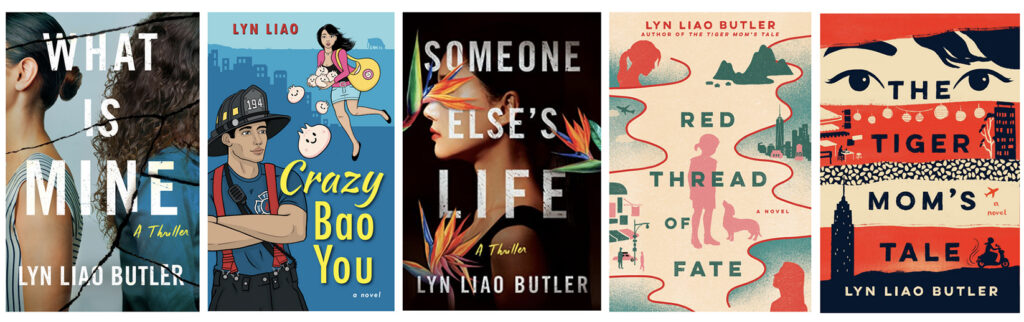
Lyn will be teaching the master class
What’s Love Got To Do With It?
together with Ali Hazelwood.
Sabrina Taitz joined WME in 2015. She represents upmarket and commercial fiction, as well as a broad swath of nonfiction, ranging from memoir to lifestyle to cookbooks. Her list includes New York Times bestsellers, B&N Book Club selections, Amazon Book of the Month selections, an ALA Award winner, a William C. Morris Award winner, and a Best American Writing selectee. Sabrina is looking for propulsive and dynamic writing that keeps her turning the pages. She lives in Manhattan with her husband and daughter.
Sabrina will offer one-on-one sessions to discuss your work
Samantha Fabien is a literary agent at Root Literary, representing award-winning and bestselling authors. Samantha is interested in high-concept, commercial and upmarket fiction with all-or-nothing stakes for adult, young adult, and middle-grade readers. Belonging to several intersectional identities and surrounded by an equally diverse community, Samantha has a deep-held passion for stories that feature, highlight, and uplift marginalized and underrepresented voices.
Her background includes a Bachelor’s in PR and Journalism from Seton Hall University and a certificate from the Columbia Publishing Course. Previously, she was the International Rights Manager at LDLA and also interned and worked at various agencies, such as Ayesha Pande Literary and Writers House
Samantha also works and volunteers with various organizations, including Gotham Writers and the New York Writing Room. Currently, Samantha serves as a co-director of the Mentorship Committee within LAOC, devoted to increasing the promotion and retention of historically underrepresented groups, particularly people of color, in the agenting profession.
Learn more at samanthafabien.com
Samantha will offer one-on-one sessions to discuss your work
Aram began his career in film and tv before moving to one of the major publishing houses. At age 26, he launched a book scouting agency where he represented U.S. film/tv companies and international publishers, guiding them to option and acquire a Who’s Who of future prize-winners and bestsellers including Brit Bennett, Emma Cline, Hernan Diaz, Anthony Doerr, Angela Duckworth, Lena Dunham, Honorée Fanonne Jeffers, Peter Godfrey-Smith, Alex Honnold, Patrick Radden Keefe, Timothy Snyder, Jeff VanderMeer and Michelle Zauner among many others.
In 2023, Aram moved to Massie & McQuilkin and the literary agent’s side of the table. Massie & McQuilkin represent a spectacular group of prize-winning and bestselling novelists, journalists, academics and social critics. From fiction writers like Jesmyn Ward, Tom Perrotta, Kelly Link, Jonathan Escoffery, Lydia Millet and Anthony Veasna So to serious reporting, criticism, history and memoir by Roxane Gay, Jacob Soll, Natasha Trethewey, Vincent Bevins, Jing Tsu and Victor Luckerson among many, many others.
Learn more at www.mmqlit.com
Aram will offer one-on-one sessions to discuss your work
Maria Massie
After attending Duke University, Maria Massie (agent) joined Kim Witherspoon in creating Witherspoon Associates, which grew rapidly during the 1990’s, representing many prize-winning and bestselling writers. Overseeing all foreign rights for the agency and managing its business affairs, Maria soon began to build her own client list as well. She now brings to MMQ over two decades’ worth of experience in representing authors and helping to make sure that they can be read around the world. She specializes in literary fiction, memoir, and cultural history.
A graduate of Phillips Academy and Columbia University, Rob McQuilkin (agent) started out in publishing at Warner Books (now known as Grand Central Publishing), where he acquired the paperback rights to books including Primary Colors, by Anonymous (Joe Klein). He left Warner Books for Anchor Books/Doubleday, where, as Editor, he acquired books by and/or worked closely with writers including Anita Hill (Speaking Truth to Power), Phillip Lopate (Totally, Tenderly, Tragically), and Lois Gould (Mommy Dressing), also acquiring the paperback rights to bestsellers such as Jon Krakauer’s Into Thin Air. Rob cut his teeth as an agent while working with Ike Williams and Jill Kneerim at The Palmer & Dodge Agency (now known as Kneerim & Williams), before leaving to start his own agency. Representing clients who have won the Pulitzer Prize, the National Book Award, the National Book Critics Circle Award, and le Prix Medicis, among other major awards and prizes, Rob specializes in fiction, memoir, history, cultural criticism, and poetry.
MASSIE & McQUILKIN is a full-service literary agency that focuses on bringing fiction and non-fiction of quality to the largest possible audience. We work closely with our clients at every stage of a project’s development, submission, and placement—staying involved in all issues of design, publicity and sales, long after the ink has dried on a contract, to ensure that the author’s needs are being met by their publisher.
In 2012, MMQ acquired the venerable literary agency Russell & Volkening, Inc. Founded in 1940 by publishing legends Diarmuid Russell and Henry Volkening, and later acquired by Timothy Seldes before its acquisition by MMQ, Russell & Volkening joined MMQ intact as a corporate entity. With its list have come the works of some of the most noted writers in the history of American publishing, including Eudora Welty, Bernard Malamud, George Plimpton, Barbara Tuchman, and South African Nobel Prize winner Nadine Gordimer. These writers and others joined MMQ’s own growing list of acclaimed fiction and nonfiction writers.
Learn more at www.mmqlit.com
Maria will offer one-on-one sessions to discuss your work
Thao Le represents children’s, YA, Romance, and Sci-fi/Fantasy. She enjoys clever, heartfelt, and commercial middle grade and YA in prose or graphic novel format and across genres. Thao’s clients include New York Times and Indie bestselling authors such as Ali Hazelwood, Thea Guanzon, Sandhya Menon, Evelyn Skye, Jessie Sima, Jessica Kim, and more…
In the Adult SFF realm, she’s a fan of contemporary fantasy, near future science fiction, and romantic fantasy. In romance, her favorite tropes are: hate-to-love/enemies-to-lovers, slow burn, forbidden/doomed romance, fake dating/marriage of convenience, grumpy/sunshine, mistaken identities, and she is a sucker for beta second male leads who steal the show (and hopefully the heroine’s heart!). If you can make her think of her favorite Asian Dramas then you’re on the right track!
In general, she’s a fan of high concepts that feel fresh and exciting. She’s especially drawn to character driven stories about family and friendships from the POV of diverse protagonists. She’s a fan of characters who are passionate about the arts, STEM, activism, and geeky fandoms. She’s a big reader of fanfiction and love that style of bingeable writing. She adores stories with a touch of magic and whimsy, and is a lifelong fan of mythology and fairytales. She’s interested in all things gothic, cottagecore, and dark academia.
Though she has represented them in the past, she is currently NOT looking for picture book writers at the moment.
While she enjoys GRRM and Tolkien, she is not the best agent for adult epic fantasies unless it’s particularly character driven.She is also not the best fit for any military, alien invasion stories, or hard science fiction. She is also not the best person for most action thriller stories involving cops, spies, or corporate espionage.
Learn more at www.dijkstraagency.com
Thao will offer one-on-one sessions to discuss your work
Amy Collins is an agent with the Talcott Notch Literary Services agency. She has more than 30 years in the publishing industry as a book buyer, Sales Director for a large non-fiction publisher, and the founder and President of New Shelves Books, one of the largest book sales and marketing companies in the US. Collins is a USA TODAY and WALL STREET JOURNAL bestselling author and has spent her career working with Barnes & Noble, Target, Costco, Books-A-Million, Wal-Mart, as well as bookstores and libraries. As well as an agent, Collins is a trusted expert, speaker, and recommended publishing consultant for some of the largest book and library retailers and wholesalers in the publishing industry. In her agent role, Collins focuses on non-fiction/ history, historical fiction, fantasy, and sci-fi. She can be reached at amysadvice.com.
Amy Collins has taught and spoken at many of the publishing industry’s top festivals and conferences, including Publisher’s Weekly’s BookCon, Keynoting at Scottish Writer’s Conference, Oklahoma Writer’s Conference, Author U, AAPS, Dublin Writers Conference, BAIPA, IBPA’s Publishing University, Dallas Book Con, NY PitchFest, PALA, St. Louis Writer’s Conference, Writers Digest Annual and Novel Conferences, Henderson Writers Conference, DFWCon, Rocky Mountain Fiction Writers Conference, and many others.
When not in the office, her focus is on the working poor and poverty elimination, and she spends a great deal of time personally and professionally working with and training women from disadvantaged backgrounds. A member of several charitable and political organizations, she donates not only her time but a portion of her company’s profits to grant-based charities that work to alleviate the cycle of poverty. Amy is currently working while traveling and living in a spacious motorhome with two dogs and a husband, living life to the fullest.
Amy will offer one-on-one sessions to discuss your work
Our expertise in women’s fiction, romance, science fiction/fantasy, and mystery/suspense makes us uniquely suited to introduce a new generation of popular novelists and to reinvigorate the publishing programs for established bestselling authors. Known for being at the forefront of trends, Berkley continues to develop authors and acquire books on the cutting edge of genre fiction. Berkley’s history of publishing in all formats and commitment to actively promoting the backlist means we remain focused on a book throughout its life. . . and on our author for an entire career.
Learn more at penguin.com/tom-colgan-vice-president-editorial-director
Tom will be teaching the master class
Publishing 101 for Writers
Tom will offer one-on-one sessions to discuss your work
Jenny Xu is a Senior Editor at Atria Books. She began her career at Houghton Mifflin Harcourt, and was most recently an Editor at Harper and Ecco. Jenny acquires a broad range of literary and commercial nonfiction and the occasional poetry collection, with a particular focus on illuminating more overlooked aspects of history and culture, and work that balances the personal with broader narratives. Prior to Atria, she acquired and edited bestselling and award-winning titles including Rise: A Pop History of Asian America by Jeff Yang, Phil Yu and Phil Wang; You’re That Bitch by Bretman Rock, The Big Reveal by Sasha Velour, The High Desert by James Spooner, The World Keeps Ending, and the World Goes On by Franny Choi, and Whiskey Tender by Deborah Taffa. She mentors through PoC in Publishing and Representation Matters.
Areas of Interest: Narrative Nonfiction, Memoir, Essays, Cultural Criticism, Illustrated/Graphic Nonfiction, Revisionist History, Humor, Pop Culture, Food Writing, Poetry, Marginalized and Underrepresented Communities
Authors Include: Lorelei Lee, Stephanie Krzywonos, Lenika Cruz, Tiana Clark, Elissa Washuta
Learn more at editors.simonandschuster.com
Jenny will offer one-on-one sessions to discuss your work
Tiffany Yates Martin started in the publishing industry more than twenty years ago as a copy editor. She currently works as developmental editor directly with authors as well as through major publishing houses on titles by New York Times, USA Today, Washington Post, and Wall Street Journal bestselling and award-winning authors as well as manuscripts for indie-published and newer writers.
She holds a BA in English literature from Georgia State University, is a member of the Editorial Freelancers Association, leads editing and writing workshops for many writers’ groups, organizations, and conferences, including Writer’s Digest, Jane Friedman, Sisters in Crime, the Women’s Fiction Writers Association, Pikes Peak Writers, and the Santa Barbara Writers Conference. She contributes to numerous writers’ sites and publications, including Writer’s Digest magazine, Writer Unboxed, and Jane Friedman’s blog.
She is the author of Intuitive Editing: A Creative and Practical Guide to Revising Your Writing, a comprehensive, actionable, accessible guide for writers on how to edit their own work, and The Intuitive Author: How to Grow and Sustain a Happier Writing Career. She is the author of six novels under her pen name, Phoebe Fox, including A Little Bit of Grace and The Way We Weren’t (Berkley/Penguin).
Learn more at foxprinteditorial.com
Tiffany will offer one-on-one sessions to discuss your work
Ali Hazelwood is the #1 New York Times bestselling author of Love, Theoretically and The Love Hypothesis, as well as a writer of peer-reviewed articles about brain science, in which no one makes out and the ever after is not always happy. Originally from Italy, she lived in Germany and Japan before moving to the US to pursue a PhD in neuroscience. When Ali is not at work, she can be found running, eating cake pops, or watching sci-fi movies with her three feline overlords (and her slightly-less-feline husband).
Learn more at alihazelwood.com
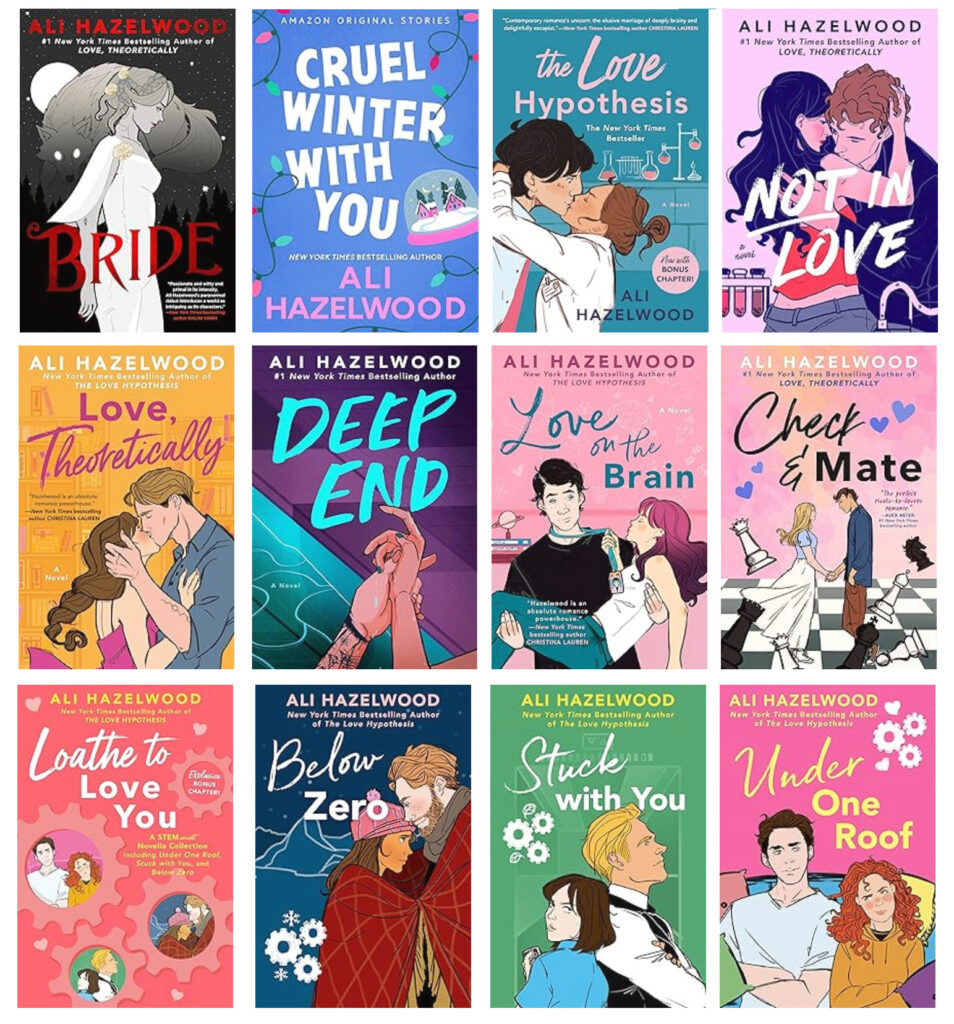
Ali will be teaching the master class
What’s Love Got To Do With It?
together with Lyn Liao Butler.
Danielle Trussoni is the New York Times, USA Today, and internationally bestselling author of eight books, including The Ancestor, Angelology and Angelopolis, all New York Times Notable Books, and The Puzzle Master, chosen by The Washington Post, Barnes & Noble and Crime Reads as one of the Ten Best Thrillers of 2023. Her latest novel The Puzzle Box won the Los Angeles Times Book Prize and the Prix Bête Noire de Libraires in France, as well as bing chosen by Publishers Weekly as a Best Book of 2024. Recently, two of her books appeared on the Best Books Since 2000 list compiled by editors of The New York Times Book Review. Her debut, Falling Through the Earth, a memoir about her relationship with her father, was selected by The New York Times as one of the Best Ten Books of the Year. She has been featured on 60 Minutes, Time Magazine, and has received cover reviews by The New York Times and The Chicago Tribune.
Danielle has been the Chair jurist for the Pulitzer Prize in Fiction and was The Dark Matters columnist for The New York Times Book Review for five years before leaving to write fiction full time. Her work has also appeared in The Guardian, Vogue, and Tin House, among other publications. Her books have been translated into thirty-two languages.
Learn more at danielletrussoni.com
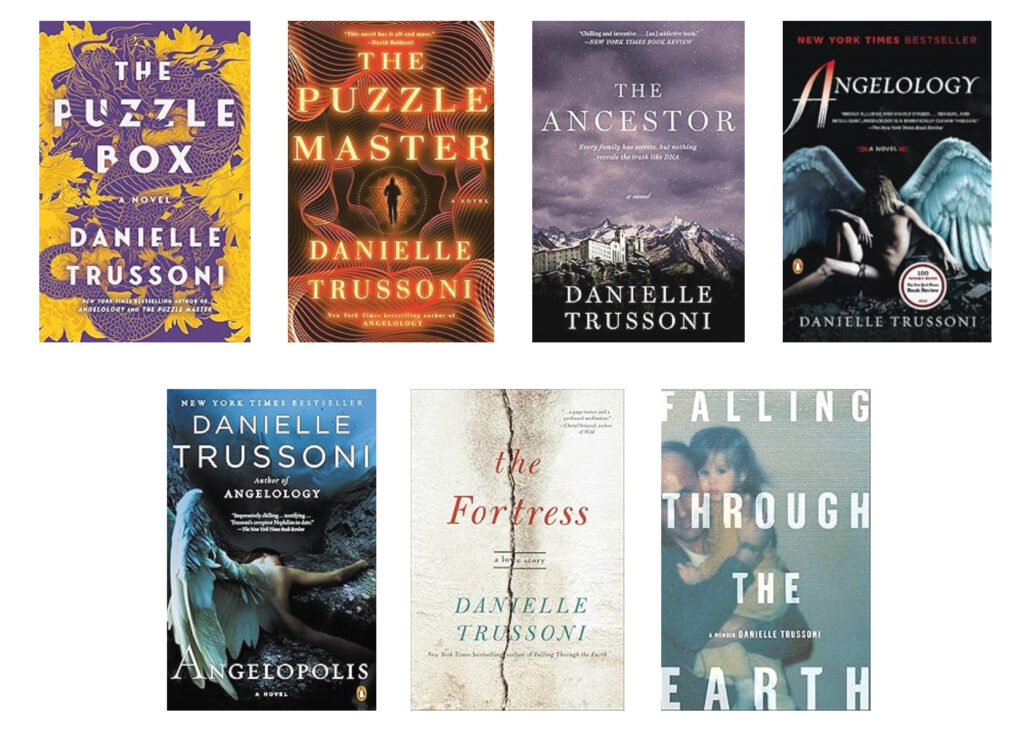
Danielle will be teaching the master class
Killer Characters: The Art of Creating a Dynamic, Unforgettable Cast in Fiction and Memoir.
 Liz Moore is a writer of fiction and creative nonfiction. Her first novel, The Words of Every Song (Broadway Books, 2007), centers on a fictional record company in New York City just after the turn of the millennium. It draws partly on Liz’s own experiences as a musician. It was selected for Borders’ Original Voices program and was given a starred review by Kirkus. Roddy Doyle wrote of it, “This is a remarkable novel, elegant, wise, and beautifully constructed. I loved the book.”
After the publication of her debut novel, Liz obtained her MFA in Fiction from Hunter College. In 2009, she was awarded the University of Pennsylvania’s ArtsEdge residency and moved to Philadelphia.
Her second novel, Heft, was published by W.W. Norton in January 2012 to popular and critical acclaim.Of Heft, The New Yorker wrote, “Moore’s characters are lovingly drawn…a truly original voice”; The San Francisco Chronicle wrote, “Few novelists of recent memory have put our bleak isolation into words as clearly as Liz Moore does in her new novel”; and editor Sara Nelson wrote in O, The Oprah Magazine, “Beautiful…Stunningly sad and heroically hopeful.” The novel was published in five countries, was long-listed for the International IMPAC Dublin Literary Award, and was included on several “Best of 2012” lists, including those of NPR and the Apple iBookstore.
Moore’s short fiction and creative nonfiction have appeared in venues such as Tin House, The New York Times, and Narrative Magazine. She is the winner of the Medici Book Club Prize and Philadelphia’s Athenaeum Literary Award. After winning a 2014 Rome Prize in Literature, she spent 2014-15 at the American Academy in Rome, completing her third novel.
That novel, The Unseen World, was published by W.W. Norton in July of 2016. Louisa Hall called it “fiercely intelligent” in her review in The New York Times; Susan Coll called it “enthralling . . . ethereal and elegant . . . a rich and convincing period piece” in her review in the Washington Post. The Unseen World was included in “Best of 2016” lists by The New Yorker, the BBC, Publishers Weekly, Vox, Google Play, and Audible.com, among others.
Moore’s fourth novel, Long Bright River, was published by Riverhead Books in January 2020. It was an instant New York Times bestseller and has become an international bestseller as well, with translations to be published in 21 territories to date. Long Bright River was a Book of the Month Club pick and the January selection for the Good Morning America book club. In addition, it launched the New York Times’s Group Text monthly feature. Barack Obama selected Long Bright River as one of his favorite books of 2020.
A limited-series adaptation of Long Bright River—co-created, executive produced, and co-written by Moore, and starring Amanda Seyfried—will premiere on Peacock in 2025. Both The Unseen World and The God of the Woods have been optioned by Sony Pictures Television, with Moore in a writing/producing capacity.
Liz Moore lives with her family in Philadelphia and is Director of the MFA program in Creative Writing at Temple University.
Learn more at www.lizmoore.net
Liz will be teaching the master class:
Starting Your Novel: People, Place and Problem
with Janelle Brown.
Steven Rowley is the New York Times bestselling author of Lily and the Octopus, a Washington Post Notable Book of 2016, The Editor, named by NPR as one of the Best Books of 2019, The Guncle, a Goodreads Choice Awards finalist for 2021 Novel of the Year and winner of the Thurber Prize for American Humor, The Celebrants, a TODAY Show Read With Jenna Book Club pick, and USA Today Bestseller The Guncle Abroad. His fiction has been published in twenty languages.
Originally from Portland, Maine, he is a graduate of Emerson College and currently resides in Palm Springs with his husband, the writer Byron Lane, and two rescue dogs.
Learn more at www.stevenrowley.com
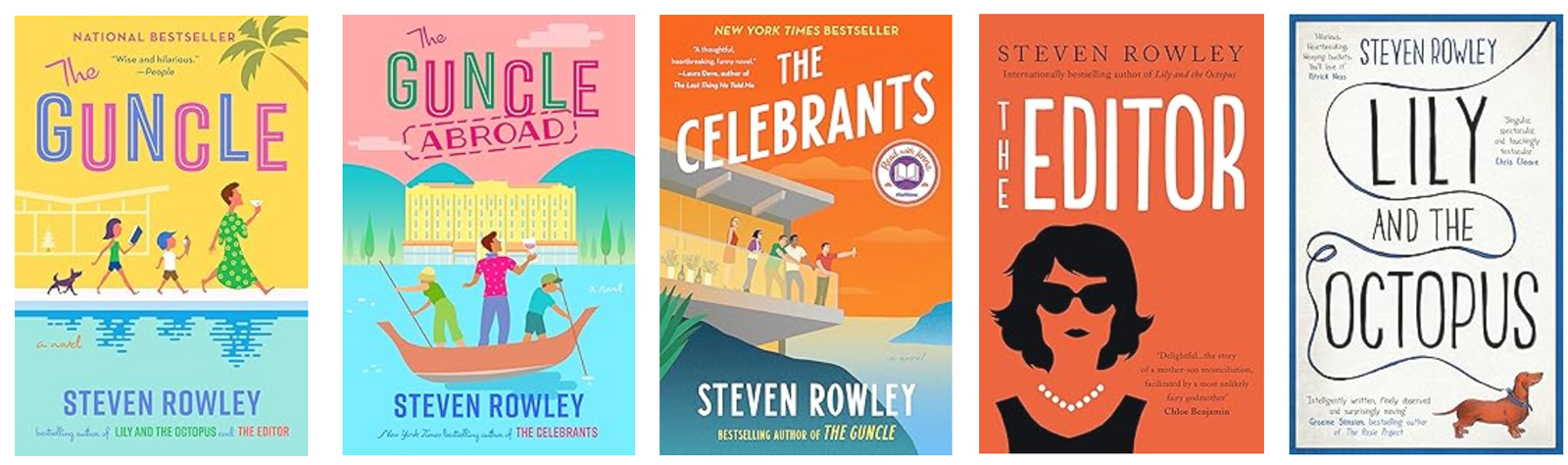
Steven will be teaching the master class:
Laughter Through Tears: Using Humor to Great Effect.
Rebecca Makkai is the author of the New York Times bestselling I Have Some Questions For You as well as four other works of fiction. Her last novel, The Great Believers, One of the New York Times’ Best Books of the 21st Century, was a finalist for both the 2019 Pulitzer Prize and the 2018 National Book Award, and was the winner of the ALA Carnegie Medal and the LA Times Book Prize among other honors. A 2022 Guggenheim Fellow, Rebecca teaches graduate fiction writing at Middlebury College, Northwestern University, and the Bennington Writing Seminars, and she is Artistic Director of StoryStudio Chicago.
Rebecca’s work has been translated into over 20 languages, and her short fiction has been anthologized in The Pushcart Prize XLI (2017), The Best American Short Stories 2011, 2010, 2009 and 2008, The Best American Nonrequired Reading 2016 and 2009, New Stories from the Midwest and Best American Fantasy, and featured on Public Radio International’s Selected Shorts and This American Life.
Rebecca has received fellowships from the National Endowment for the Arts, the Guggenheim Foundation, and the Illinois Arts Council, as well as residencies at Yaddo, Ucross, and Ragdale. She was awarded the 2020 Mark Twain Award for Distinguished Contributions to Midwestern Literature.
Learn more at rebeccamakkai.com
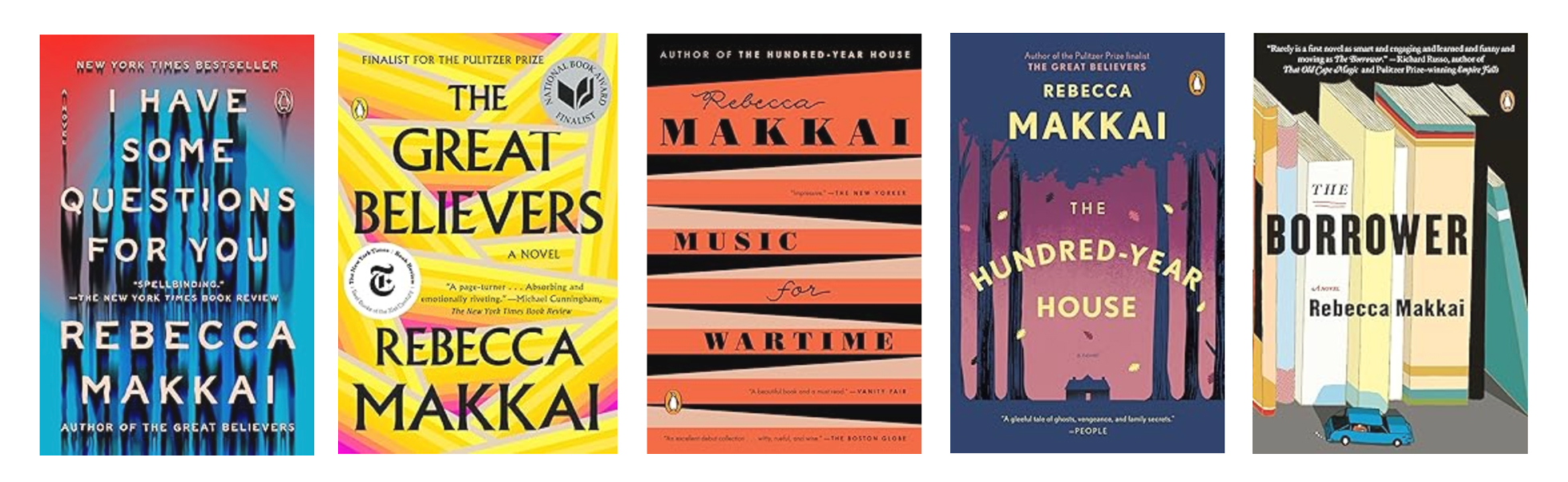
Rebecca will be teaching the master class “What Makes the Story Go?” .
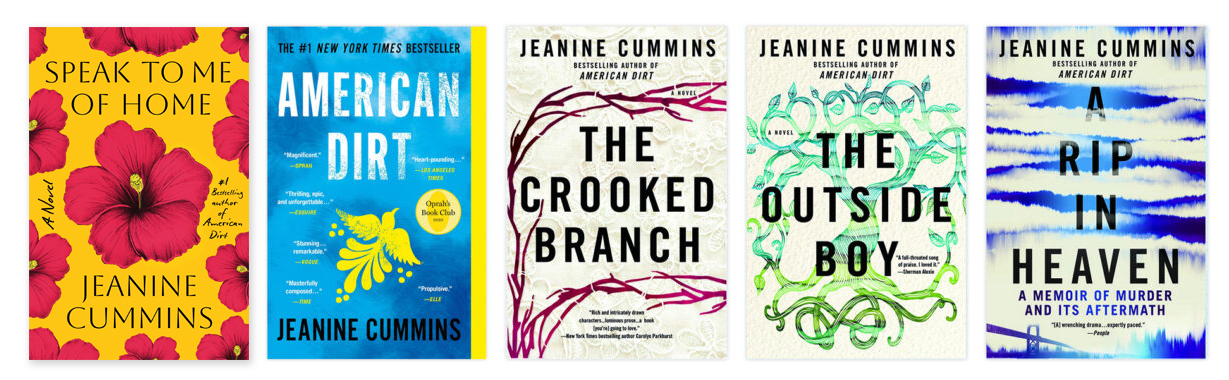
Jeanine Cummins is the #1 New York Times bestselling author of five books including her latest, Speak to Me of Home and American Dirt, which was an Oprah’s Book Club and a Barnes & Noble Book Club selection, as well as a #1 Indie Next pick. She is published in more than forty countries. Her other works include the memoir A Rip in Heaven and the novels The Outside Boy and The Crooked Branch. She lives in New York with her husband, their two daughters, and their dogs.
Learn more at www.jeaninecummins.com
Jeanine will be teaching the master class:
Writing About Relationships.
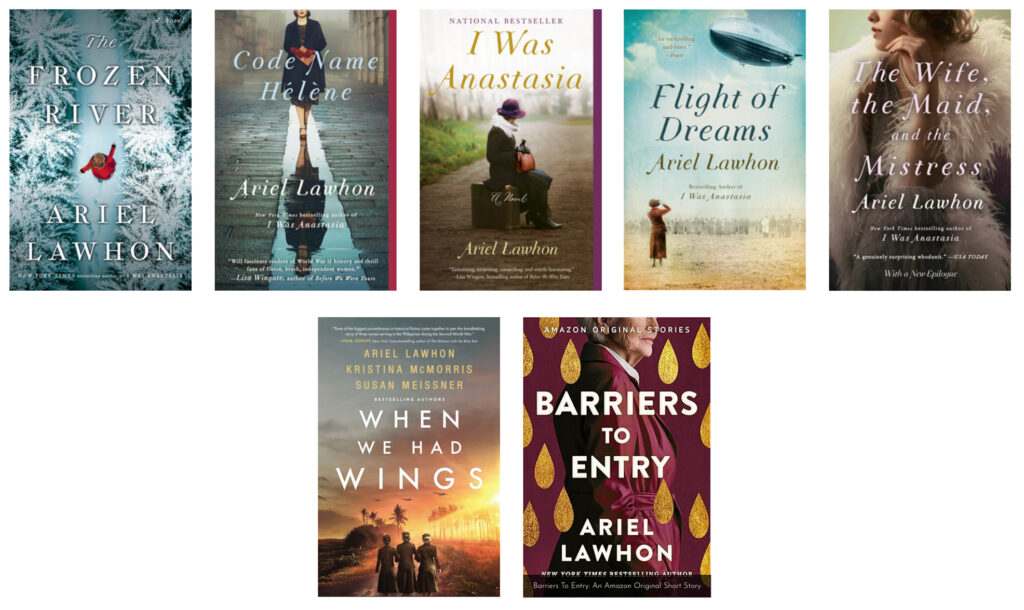
Ariel Lawhon is a critically acclaimed, New York Times bestselling author of historical fiction. Her novels include: The Frozen River, Code Name Hélène; I Was Anastasia; Flight of Dreams; The Wife The Maid and The Mistress; When We Had Wings (co-written with Kristina McMorris and Susan Meissner); and Barriers to Entry an Amazon Original Short Story. Her books have been translated into numerous languages and have been Good Morning America Book Club, Library Reads, One Book One County, Indie Next, Costco, Amazon Spotlight, and Book of the Month Club selections. She lives in the rolling hills outside Nashville, Tennessee, with her husband and four sons. She splits her time between the grocery store and the baseball field.
Learn more at www.ariellawhon.com
Ariel will be teaching the master class
The Storytellers Craft
together with Patti Callahan Henry.
“With a belief that the power of story changes us and moves us, Patti’s historical fiction, SURVIVING SAVANNAH, WILD SWAN, and BECOMING MRS. LEWIS explores the untold stories of the past that affect us now.” (writing as Patti Callahan)
SURVIVING SAVANNAH, a new historical fiction, based on the true story of the Steamship Pulaski wreck, known as “The Titanic of the South” was released March 9, 2021.
The new podcast series, “The Untold Story Behind Surviving Savannah” is an in-depth exploration into the fascinating stories explored in her novel, Surviving Savannah. The podcast series (03/21) includes interviews with some of the foremost experts on the myth and lore of Savannah, shipwreck treasure hunting, the hidden stories in museums, and the astounding real-life family story that inspired the novel. Trailer and Episodes One-Six, available now.
WILD SWAN, a novella following the fiery life of one of history’s greatest heroines and the mother of modern nursing: Florence Nightingale by Patti Callahan was released December 2020, as an Audible Original performed by the award-winning narrator, Cynthia Erivo.
BECOMING MRS. LEWIS—The Improbable Love Story of Joy Davidman and C.S. Lewis was released in an expanded edition, March 2020. The author is also the host of the popular seven-part original “Behind the Scenes of Becoming Mrs. Lewis Podcast Series”—the podcast audiobook collection including bonus material was released in January 2020.
ONCE UPON A WARDROBEis another tenderly imagined and enchanting story that pulls back the curtain on the early life of C. S. Lewis from Callahan— October 19, 2021, and available now—published by Harper Collins’ new imprint —Harper Muse as their debut novel.
REUNION BEACH, Stories Inspired by Dorothea Benton Frank, a collaboration and tribute was released April 27, 2021. Patti joins a group of bestselling authors to present a moving anthology to pay tribute to the legendary NYT bestselling author and her literary legacy.
Patti Callahan is the co-host and co-creator of the popular weekly online Friends and Fiction live web show and podcast, featuring New York Times bestselling authors Mary Kay Andrews, Kristy Woodson Harvey, and Kristin Harmel. With endless stories and special guests, they are LIVE every Wednesday at 7 pm ET on the Friends and Fiction Facebook group page, their YouTube Channel, and Parade Magazine Facebook page. You can follow them on Instagram and, for weekly updates, subscribe to their newsletter.
In a recent essay series partnership with Parade Magazine, each Wednesday viewers get a new “life lesson” from one of the FF writers on Parade.com as well as a chance to discuss the themes later that evening on Facebook Live.
A full-time author, mother of three, and grandmother of two, she lives in Mountain Brook, Alabama with her husband, Pat Henry.
THE SECRET BOOK OF FLORA LEA: Her newest novel, The Secret Book of Flora Lea, is set outside Oxford in the hamlet of Binsey, and will be released on May 2nd, 2023 with Simon & Schuster Atria.
She’s spent countless hours, and yet not nearly enough hours, wondering and reading and talking about C. S. Lewis, Joy Davidman, and their life together.
Patty will be teaching the master class
The Storytellers Craft
together with Ariel Lawhon.

Learn more at
patticallahanhenry.com
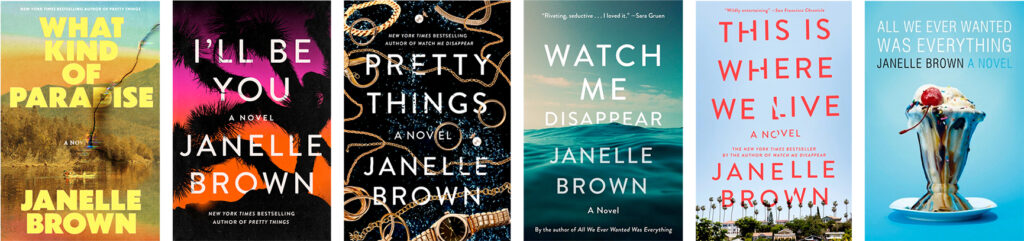
Janelle Brown is the New York Times bestselling author of the novels I’ll Be You, Pretty Things, Watch Me Disappear, All We Ever Wanted Was Everything, and This Is Where We Live, with What Kind of Paradise coming in June 2025. Her books have been sold in two dozen countries around the world. Pretty Things – named a Best Book of 2020 by Amazon – is currently being adapted for television by Peacock and Fifth Season.
Her journalism and essays have appeared in The New York Times, Vogue, Elle, Wired, Self, RealSimple, The Los Angeles Times, and numerous other publications. Previously, she worked as a senior writer at Salon, and began her career as a staff writer at Wired during the dotcom boom years, working on seminal Web sites like HotWired and Wired News. In the 1990s, she was also the editor and co-founder of Maxi, an irreverent (and now, long-gone) women’s pop culture Webzine.
A native of San Francisco and graduate of UC Berkeley, she has since defected to Los Angeles, where she lives with her husband Greg and their two children.
Learn more at www.janellebrown.com
Janelle will be teaching the master class:
Starting Your Novel: People, Place and Problem
with Liz Moore.
Jynne Dilling is the Vice President and Deputy Publisher of Riverhead Books where she oversees the publishing campaigns for many prize-winning writers, including Nobel Prize winner Olga Tokarczuk, Booker Prize winner Marlon James, Pulitzer Prize winner Hernan Diaz, and three-time National Book Award finalist Lauren Groff. She also acquires and edits select prize-winning books for Riverhead, including recent works by bestselling writers Katherine May, Patricia Lockwood, and Pico Iyer.
She was the Antarctica Artist in Residence, for which she was featured on the cover of Poets & Writers, and her nonfiction and poetry has appeared in The New York Review of Books, The New York Times, Slate, Glamour, Food & Wine, PBS Newshour, and The Antarctic Sun, among other places.
Learn more at www.penguin.com
Jynne will be teaching the master class:
Breakout Debut Sensations.
Jynne will offer one-on-one sessions to discuss your work
Jonathon Medeiros is a poet and essayist who teaches and learns about Language Arts at his alma mater Kauaʻi High School. Jonathon was born and raised on Kauai, spending much of his youth working on the farm and fishing with the family. He uses reflective writing and poetry to explore and know more clearly the people and the places of Kaua’i. As he teaches his students, when we are curious about where we happen to be, we can learn much about our responsibilities to place and to each other. He walks, paddles, surfs, and enjoys spending time with his brilliant wife and daughters. His writing has been published with EdWeek, California English, English Journal, English Leadership Quarterly, Bamboo Ridge Press, Hawaii Pacific Review, and Mystic Picnic, with pieces upcoming in Sidhe, Banyan Literature and Art, and the Johns Hopkins Review, much of which has been collected at jonathonmedeiros.com
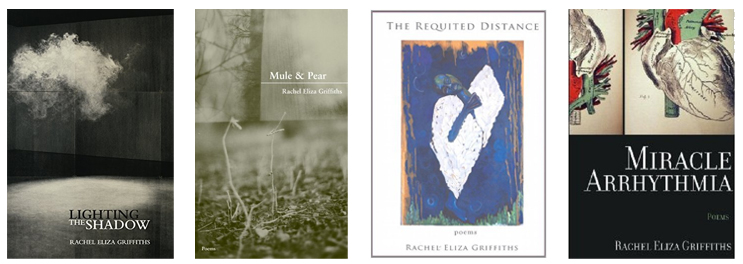
Rachel Eliza Griffiths is a multimedia artist, poet, and novelist. Her collection of poetry and photography Seeing the Body (W.W. Norton, 2020) was selected as the winner of the 2021 Hurston/Wright Foundation Legacy Award in Poetry and the 2021 Paterson Poetry Prize. The book was also nominated for a 2020 NAACP Image Award. Griffiths is the author of Miracle Arrhythmia (Willow Books, 2010); The Requited Distance (Sheep Meadow Press, 2011); Mule & Pear (New Issues Poetry & Prose, 2011), selected for the 2012 Inaugural Poetry Award by the Black Caucus of the American Library Association; and Lighting the Shadow (Four Way Books 2015), selected as a finalist for the 2015 Balcones Poetry Prize and the 2016 Phillis Wheatley Book Award in Poetry. Her work has appeared widely, including The New Yorker, the Paris Review, the New Yorker, Tin House, Best American Poetry, the Los Angeles Review of Books, The New York Review of Books, Guernica, and many others. Griffiths’ debut novel, Promise, was published by Random House in 2023. She lives in New York City. (portrait image by Beowulf Sheehan.)
Learn more about Rachel at rachelelizagriffiths.com
Curtis Sittenfeld is the bestselling author of seven novels: Prep, The Man of My Dreams, American Wife, Sisterland, Eligible, Rodham, and Romantic Comedy, which was picked for Reese Witherspoon’s Book Club. Her first story collection, You Think It, I’ll Say It, was published in 2018 and also picked for Reese Witherspoon’s Book Club, and her second story collection, Show Don’t Tell, was published in 2025. Her books have been selected by The New York Times, Time, Entertainment Weekly, and People for their “Ten Best Books of the Year” lists, optioned for television and film, and translated into thirty languages. Her short stories have appeared in The New Yorker, The Washington Post, and Esquire, and in the Best American Short Stories anthology, of which she was the 2020 guest editor. Her non-fiction has appeared in The New York Times, Time, Vanity Fair, The Atlantic, Slate, and on “This American Life.” Curtis has five times been a “Jeopardy!” answer and once been a Word Search puzzle.
Learn more at curtissittenfeld.com
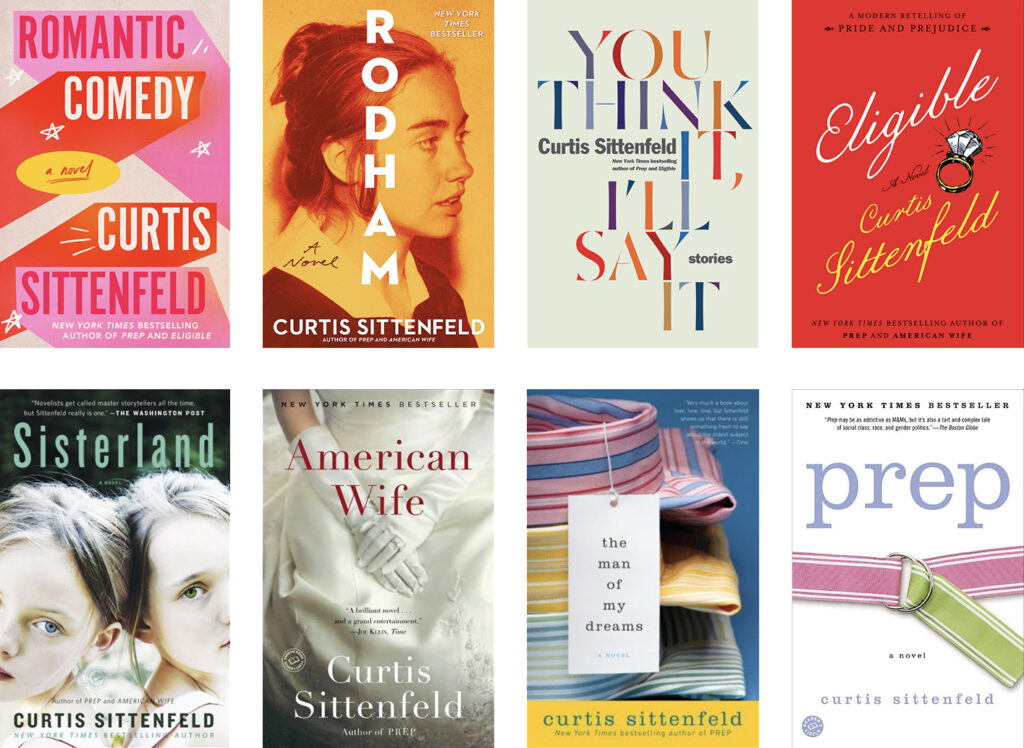
Curtis will be teaching the master class:
How to Write a Great Short Story: Cultivating Empathy, Voice, and Character in Short Fiction with Heidi Pitlor
Tim Seibles was born in Philadelphia in 1955. He was the Poet Laureate of Virginia from 2016 to 2018. His poems engage many aspects of life, from the romantic to the sociopolitical to the mystical. He is a former National Endowment for the Arts fellow and Provincetown Fine Arts Work Center fellow.
His seven books include Hurdy-Gurdy, Hammerlock, Buffalo Head Solos, and Fast Animal, a finalist for the 2012 National Book Award, winner of the Theodore Roethke Memorial Poetry Prize and the Pen Oakland Josephine Miles Award for Poetry. One Turn Around the Sun, an extensive examination of his immediate family was released in 2017.
In the last year, Tim has also written poems for two monuments. One in Norfolk, dedicated to the Norfolk 17 who began the fearful process of integrating Virginia public schools, the other for an installation in Dallas, Texas, that addresses the many race-based lynchings that took place there.
His poems have appeared in several anthologies. Among them: In Search of Color Everywhere, Seriously Funny, Uncommon Core, This is The Honey, and Villanelles. Seibles’ works have also been featured in Best American Poetry 2010, 2013, 2023. His latest collection, Voodoo Libretto: New & Selected Poems was published by Etruscan Press in 2020.
Learn more at www.timseibles.com
Tim will be teaching the master class:
The Heart Never Rests: Writing Lyric Poetry.
Salman Rushdie will appear virtually on Saturday afternoon,
giving a talk solely to KWC attendees on his advice to writers.
Salman Rushdie is the author of thirteen novels: Grimus, Midnight’s Children (which was awarded the Booker Prize in 1981), Shame, The Satanic Verses, Haroun and the Sea of Stories, The Moor’s Last Sigh, The Ground Beneath Her Feet, Fury, Shalimar the Clown, The Enchantress of Florence, Luka and the Fire of Life, Two Years Eight Months and Twenty-Eight Nights, The Golden House and Quichotte.
Rushdie is also the author of a book of stories, East, West, and four works of non-fiction – Joseph Anton – A Memoir, Imaginary Homelands, The Jaguar Smile, and Step Across This Line. He is the co-editor of Mirrorwork, an anthology of contemporary Indian writing, and of the 2008 Best American Short Stories anthology.
A Fellow of the British Royal Society of Literature, Salman Rushdie has received, among other honours, the Whitbread Prize for Best Novel (twice), the Writers’ Guild Award, the James Tait Black Prize, the European Union’s Aristeion Prize for Literature, Author of the Year Prizes in both Britain and Germany, the French Prix du Meilleur Livre Étranger, the Budapest Grand Prize for Literature, the Premio Grinzane Cavour in Italy, the Crossword Book Award in India, the Austrian State Prize for European Literature, the London International Writers’ Award, the James Joyce award of University College Dublin, the St Louis Literary Prize, the Carl Sandburg Prize of the Chicago Public Library, and a U.S. National Arts Award. He holds honorary doctorates and fellowships at six European and six American universities, is an Honorary Professor in the Humanities at M.I.T, and University Distinguished Professor at Emory University. Currently, Rushdie is a Distinguished Writer in Residence at New York University.
He has received the Freedom of the City in Mexico City, Strasbourg and El Paso, and the Edgerton Prize of the American Civil Liberties Union. He holds the rank of Commandeur in the Ordre des Arts et des Lettres – France’s highest artistic honour. Between 2004 and 2006 he served as President of PEN American Center and for ten years served as the Chairman of the PEN World Voices International Literary Festival, which he helped to create. In June 2007 he received a Knighthood in the Queen’s Birthday Honours. In 2008 he became a member of the American Academy of Arts and Letters and was named a Library Lion of the New York Public Library. In addition, Midnight’s Children was named the Best of the Booker – the best winner in the award’s 40 year history – by a public vote.
His books have been translated into over forty languages.
Molly Ringwald is an actor, singer, and author. Her extensive film credits include Paul Mazursky’s Tempest, the iconic John Hughes films Sixteen Candles, Pretty in Pink, and The Breakfast Club, the indie film All These Small Moments, and Netflix’s The Kissing Booth. On stage, Ringwald has starred in numerous Broadway productions, including Cabaret, Enchanted April, and Sweet Charity, and her television credits include the hit series Riverdale, Dahmer – Monster: The Jeffrey Dahmer Story, and Feud: Capote vs. the Swans.
She is the author of two bestselling books, Getting the Pretty Back and When It Happens to You, and the translator of the award-winning bestselling French novel Lie With Me by Philippe Besson and the memoir My Cousin Maria Schneider by Vanessa Schneider. Her essays have appeared in the New York Times, The New Yorker, Vogue, Marie-Claire, and The Guardian. She is currently completing a memoir about her time living and working abroad entitled The Paris Years.
Ryan Harbage
Ryan founded The Fischer-Harbage Agency in January, 2007 and has placed books for six #1 New York Times bestselling authors. Ryan’s clients include Miranda Esmonde-White, author of the New York Times bestseller Aging Backwards and host of public television’s #1 fitness show, “Classical Stretch,”; Grammy-nominated singer-songwriter Halsey, author of the New York Times bestselling poetry collection I Would Leave Me If I Could; Sunny Hostin, co-host of “The View” and bestselling author; iconic musician and New York Times bestselling author Robbie Robertson; New York Times bestselling memoirist and animal communications pioneer Christina Hunger; MSNBC anchor and author of The Likeability Trap Alicia Menendez; New York Times bestselling memoirist and producer Janet Mock; American Booksellers Association “Book of the Year” winner and New York Times bestselling novelist J. Ryan Stradal; He represented Gérard de Villiers until the author passed away–his S.A.S. series has sold more than 120 million copies worldwide. Books represented by the agency have received many accolades, among them: the American Bookseller’s Association Indies Choice Book of the Year Award, American Library Association Stonewall Honor Book, Hugh M. Hefner First Amendment Award, Midwest Booksellers Choice Award, Nautilus Book Award, The Palmer Prize, Robert F. Kennedy Book Award, Women’s Way Book Prize; and finalists for the Desmond Elliot Prize, the Thurber Prize, Books for a Better Life Award, Goodreads Best Books of the Year, Lamda Award, Langum Prize in Historical Fiction, and The National Book Award (fiction).
He was an editor at Simon & Schuster where he helped create and launch a new imprint, now Gallery Books. He also worked as an editor for Little, Brown & Company as well as Penguin Random House (where he edited books for Plume, Dutton, and Viking). He acquired and edited the Pulitzer Prize winning Boston Globe Spotlight Team’s Betrayal: The Crisis in the Catholic Church, which informed the movie Spotlight, winner of the Academy Award for Best Picture as well as Peter Singer’s New York Times bestseller The President of Good & Evil: Questioning the Ethics of George W. Bush. He has also worked with numerous other bestselling authors, including Farah Ahmedi, Michael Connelly, Matthew Diffee, John Feinstein, Malcolm Gladwell, Brad Listi, and Danny Wallace.
For twelve years, Ryan taught courses on writing book proposals and fiction at The New School University’s MFA Program, Pratt Institute, and Mediabistro. He addresses writers regularly at Stanford University’s Center for Advanced Study in the Behavioral Sciences, New York University’s MFA program, the New School’s MFA program, and has spoken at many other venues including the Columbia Publishing Course, Aspen Summer Words, Sarah Lawrence College’s MFA program, The Colgate Writers’ Conference, Miami Writers Institute, The New Orleans Writers Conference, and The Writers’ League of Texas, among others. He has been quoted on writing and publishing in The New York Times, The Chicago Tribune, The Los Angeles Times, The Atlanta Journal-Constitution, Poets & Writers, Publishers Weekly and on “Good Morning America,” among other outlets. Ryan is a graduate of Kalamazoo College, The Radcliffe Publishing Course, and the Master of Fine Arts program in writing and literature at Bennington College. He lives with his family in Brooklyn.
Learn more about Ryan at fischerharbage.com
Ryan will be teaching the master class Write On: Achieving Successful Publication.
Ryan will offer one-on-one sessions to discuss your work
Cecilia “CeCe” Lyra is a literary agent at Wendy Sherman Associates representing adult fiction and nonfiction. A longterm strategic thinker, CeCe prioritizes the creative reach and sustainable longevity of her authors’ careers, and she is especially looking for clients with whom she can build fruitful, lasting relationships. CeCe believes that stories are empathy generating machines capable of healing, connecting, and enacting true change. She is particularly drawn to books centered around power (dynamics, imbalance, rise & fall), identity (perception, exploration, intersectionality), and dysfunction (familial, societal, cultural) told with originality, nuance, and authenticity.
As a mixed race Latinx immigrant, CeCe understands the power of seeing oneself reflected in books, hence her passion for championing under or misrepresented voices and narratives. CeCe is also the co-host of the popular podcast, The Shit No One Tells you About Writing, which has over four million downloads. CeCe leads sought-after classes on the craft of writing with the goal of supporting emerging writers in their path to publication.
CeCe will be teaching the master class
Hacking Writing on a Line Level: A Guide to Elevating Your Story One Word at a Time.
Cece will offer one-on-one sessions to discuss your work
Kirby Kim represents both literary and commercial authors. He’s most interested in receiving manuscripts that straddle the fence a bit, with upmarket expression combined with a genre element or plot device (Adam White, Ling Ling Huang, Sierra Greer). When it comes to straight literary work, he’s alternatively drawn to rich, sweeping stories that try to encompass a time or a place (Malcolm Brooks) or tightly written, narratively innovative stories or voices with award potential (Gina Apostol). His commercial interests include thrillers (James A. McLaughlin), mysteries (Matthew Sullivan), speculative fiction (Ted Chiang), and horror (Nick Cutter).
He also represents a range of nonfiction working with leaders and journalists in the areas of science (Dan Werb), culture and current affairs (Lauren Etter). He’s also known for representing pop culture, in particular music (Common) and comedy (Dave Hill).
A native of Los Angeles, California, Kirby attended Pomona College and got his JD at UC Hastings College of the Law. Kirby is currently a board member of the Asian American Writers Workshop. He lives in Phoenix, Arizona with his wife and two kids.
Lean more about Kirby at www.janklowandnesbit.com
Kirby will offer one-on-one sessions to discuss your work
Heidi will be teaching the master class:
How to Write a Great Short Story: Cultivating Empathy, Voice, and Character in Short Fiction with Curtis Sittenfeld
Heidi is available for individual sessions to discuss your manuscript.
Lisa Sharkey is the SVP and Publisher of the newly inaugurated HarperCollins imprint, Harper Influence, where her team acquires high profile non-fiction spanning popular culture, from general lifestyle and entertainment to stories of survival and inspiration. Whether in the fields of science, medicine, nature, music, lifestyle, spirituality, cooking, design, or news-driven narratives, the defining theme of her books surrounds cultural impact and relevance. A creative pioneer across multiple media platforms, Lisa Sharkey has overseen the acquisition and publication of more than seventy-five New York Times Bestsellers, including multiple number one bestsellers.
As part of her HarperCollins innovation, Sharkey created a robust video and live-streaming division with tens of millions of views of book-related content. Lisa is also a veteran interviewer, moderator, and speaker on various topics from book publishing to transferable skills in the media landscape. In March, Sharkey delivered the keynote address at the London Book Fair Writers’ Summit and was a featured speaker at the fair. She also teaches author branding and advises writers at conferences across the country as a faculty member at Aspen Words and The Kauai Writers Conference.
She has published authors including: Rep. Jamie Raskin, Benjamin Hall, Michelle Miller, Johnny Joey Jones, Pete Hegseth, Shannon Bream, Jim Acosta, Tim Tebow, the late Rep. Elijah Cummings, Megyn Kelly, Gabrielle Douglas, Dr. Deborah Birx, Dan Ariely, Laurie Hernandez, Jessie James Decker, Russ, Sammy Hagar, Cissy Houston, Pat Benatar, Maira Kalman, Hannah Brown, Amy Morin, Toni Braxton, Rev. Run Simmons, Gregg Allman, Lindsey Vonn, Jorge Posada, Bud Selig, Tony La Russa, Peter Max, Melissa Ben-Ishay, Dr. Jennifer Ashton, Randi Zuckerberg, Tippi Hedron, Maurice Benard, Chita Rivera, Geoffrey Kent, and HM King Charles III.
Prior to her publishing career, Sharkey was President of Al Roker Entertainment, Senior Producer of Good Morning America and worked at various network news organizations from CBS to PBS and KingWorld’s Inside Edition. She executive produced the documentary Profiles in Courage: A Kennedy Legacy, hosted by Caroline Kennedy.
A two-time Emmy Award winner, Sharkey is also the recipient of Peabody and Dupont Awards for her work as part of the ABC News team during 9/11. Sharkey is also a member of various groups and organizations including: the New York regional cabinet for Washington University in St. Louis, and the advisory board for NABU.org.
Sharkey also spearheads the annual Mona Sherman Memorial Lecture, honoring her late mother Mona Sherman, bringing high-profile speakers to the Berkshires in Massachusetts at no cost to the community. For the past eleven years, Sharkey has been a mentor for American Corporate Partners helping veterans transition out of the military and into civilian jobs. She is also a certified Yoga instructor.
Lisa earned her bachelor’s degree in Comparative Arts from Washington University in St. Louis. Most recently, she received the 2024 Distinguished Alumni Award from the School of Arts and Sciences. Lisa resides in one of New York City’s first eco-houses designed by her husband and three children. After creating the eco-house, Sharkey co-authored with her husband, architect Paul Gleicher, the book Dreaming Green: Eco-Fabulous Homes Designed to Inspire published in 2008 by Clarkson Potter.
Lisa will be teaching the Master Class – Defining Your Author Brand
Lisa is available for individual sessions to discuss your manuscript.

Susan Golomb has been an agent of literary and upmarket fiction and non-fiction for over 30 years both with her own agency and now with Writers House. Her clients include National Book Award Winners Jonathan Franzen and William T. Vollmann; New York Times bestsellers Rachel Kushner (also a NBA and Booker nominee), Imbolo Mbue (winner of the Penn Faulkner award), Vauhini Vara (Pulitzer Prize finalist); Edgar Award winning authors Noah Hawley and Angie Kim; Brando Skyhorse (winner of the Penn Hemingway Award); Janelle Brown; Danielle Trussoni; and NBCC finalists Wayetu Moore, Manjula Martin and Amy Reading, among others.
Learn more at: www.writershouse.com
Read more of the P&W interview with Susan here: Poets & Writers Magazine, Agents & Editors: Susan Golomb
Schedule an Agent Session with Susan.
” Some of my books are kind of out there. They are ambitious in ways that are not the nicely crafted domestic novel. It’s hard to find assistants or interns who can pick up on the same potential that I see. I call some of the books that I represent my shaggy dogs. They’re exuberant and they try to do all kinds of things, but they may also have whole parts that need to be deleted or characters that need to disappear. They need a lot of grooming before they go out. I enjoy that process, and when I go out with those manuscripts, they’re so fresh and inventive and exciting that I do well with them.”
— from Poets & Writers Magazine feature interview with Michael Szczerban
Kevin Larimer is editor-in-chief of Poets & Writers, the leading literary organization in the United States. He has served as moderator / interviewer for many of the sessions of KWC online. Everyone who saw his presentations at the 2019 Kauai Writers Conference recognizes what a depth of knowledge Kevin brings, along with natural warmth and humor. We are most grateful for his participation.

Kevin is the author of The Poets & Writers Complete Guide to Being a Writer: Everything You Need to Know about Craft, Inspiration, Agents, Editors, Publishing, and the Business of Building a Sustainable Writing Career, published by Avid Reader Press, an imprint of Simon & Schuster.
He has given presentations and appeared on a number of panels on publishing at events such as the Library of Congress National Book Festival, the Sozopol Fiction Seminars, the Anguilla Lit Fest, the Slice Literary Writer’s Conference, the Kachemak Bay Writers’ Conference, Poets Forum, the Bronx Book Fair, and the Writer’s Hotel.
His poems have appeared in Poetry International, Fence, Pleiades, Verse, and a dozen other literary magazines. He has written book reviews for American Letters & Commentary, American Book Review, Chelsea, and the Pittsburgh Post-Gazette. He holds a degree in journalism and received his MFA in poetry from the Iowa Writers’ Workshop, where he was the poetry editor of the Iowa Review. His latest book, The Poets & Complete Guide to Being a Writer, was written with his wife, Mary Gannon, executive director of the Community of Literary Magazines and Presses.
Poets and Writers is the nation’s leading organization serving authors. In addition to its monthly magazine, it provides a wide range of services to help authors with all aspects of their work and their careers.
Kevin Larimer, as editor-in-chief, heads not only Poets and Writers magazine, but all of their educational programs. He is widely admired as one of the most knowledgeable people on the craft and business of writing. This year marks his fourth appearance at the Kauai Writers Conference. We have invited him each year because of the depth of his knowledge and his deeply felt desire to help writers in all stages of their careers.
A publishing consultation with Kevin is a rare opportunity. Even if you live in New York City, you would find it difficult to or impossible to sit with him in person to get his advice. On Kauai it is easy. We know of no other person as well positioned as Kevin to understand your unique journey as a writer and give you insightful advice on how to achieve your goals. Whether you are writing fiction, memoir, nonfiction or poetry, you’ll find a session with Kevin a milestone in your evolution as an author.
In addition to his broad knowledge of book publishing, Kevin is also intimately familiar with all of the leading literary magazines. Often writers overlook the importance of these publications. Getting your work, or excerpts of it, in print in one of them can be a crucial step for you, and Kevin can help you learn how to do it.
Learn more about Kevin Larimer at pw.org
Kevin is available for individual sessions to discuss your manuscript.

Wendy Sherman has been in publishing more years than she cares to admit. She has held senior, executive positions at Simon & Schuster, Macmillan, and Henry Holt where she was Associate Publisher. During her time at these major publishing houses, she worked in the areas of subsidiary rights, marketing, sales, and editorial. She left to pursue her dream of becoming a literary agent and founded Wendy Sherman Associates Literary Management in 1999.
Wendy loves voice and story-driven fiction that hits that sweet spot between literary and mainstream. She has a passion for Southern voices, suspense with a well-developed protagonist, and has a weakness for family secrets, mother-daughter relationships, and realistic love stories.
She is also interested in non-fiction with a unique twist by authors with a strong, well-developed media platform. Areas of interest include memoir, narrative non-fiction, practical and prescriptive, self-help and popular psychology, parenting, lifestyle, pop-culture, health, wellness, and spirituality, and and just about anything to do with food or dogs.
Wendy is a member of the Association of American Literary Agents (AALA) and the Women’s Media Group.
Wendy Sherman Associates, Inc. is the home of award-winning writers and bestselling books. With a unique perspective on the publishing process, and an invaluable blend of experience in editorial, acquisitions, sales, marketing, and contract negotiations, we offer our clients a comprehensive strategy for navigating the publishing terrain. Our office is based in New York City, but we are a bi-coastal establishment with agents in San Francisco and Seattle. As a full service agency, we also partner with major film and television agents in Los Angeles.
With a long-standing tradition of attracting and identifying quality material and a strong knowledge of market trends, we have proven success discovering first time authors as well as managing the work of those with established careers. We pride ourselves on cultivating long-term relationships with clients as well as with publishers throughout the world.
Learn more at wsherman.com
Wendy will offer one-on-one sessions to discuss your work
Panio Gianopoulos is the author of the #1 indie-bestselling novella, A Familiar Beast, and the short story collection, How to Get Into Our House and Where We Keep the Money. His writing has appeared in Tin House, Northwest Review, Chicago Quarterly Review, McSweeney’s Internet Tendency, Literary Hub, Salon, The Rattling Wall, Big Fiction, Weekly Humorist, The Brooklyn Rail, and the Los Angeles Review of Books, among others. A recipient of a New York Foundation for the Arts Award for Non-Fiction, he has been featured in the anthologies The Bastard on the Couch, Cooking and Stealing: The Tin House Non-Fiction Reader, and The Encyclopedia of Exes. He received his B.A. from the University of Massachusetts at Amherst and his M.B.A. from Stanford University. A veteran book editor, he is the co-founder and editorial director of The Next Big Idea Club, a book discovery platform and subscription book club curated by Malcolm Gladwell, Susan Cain, Daniel Pink, and Adam Grant.
Alison Fairbrother is an associate editor at Riverhead Books, where she acquires fiction, memoir, and narrative nonfiction. Her authors are New York Times bestsellers and 5 Under 35 awardees from the National Book Foundation, and include Kristen Arnett, Aja Gabel, Anna Hogeland, R. O. Kwon, and Jenny Xie. She’s worked closely with Riverhead’s editor-in-chief on the manuscripts of Chang-rae Lee, Liz Moore, and Tiphanie Yanique, among others.
Riverhead Books, an imprint of Penguin Publishing, is a leading publisher of literary fiction and quality nonfiction. Since its inception in 1994, Riverhead has been devoted to publishing authors who change the conversation—urgent, unheard voices from a wide variety of backgrounds who have new perspectives and new stories to tell. Riverhead’s books and authors have won or been finalists for the Nobel Prize, the Pulitzer Prize, the National Book Award, the National Book Critics Circle (NBCC) Award, the MacArthur “Genius Grant,” the Hurston Wright Legacy Award, the Dayton Literary Peace Prize, and many other honors.
In addition, Alison is a published novelist, and she offers a unique perspective on both sides of the business. Her first novel, The Catch (Random House, 2022), was a New York Times Editors’ Choice, Amazon Editors’ Pick, and People magazine Best New Book.
Alison is available for individual sessions to discuss your manuscript.
Learn more about Alison at lithub.com/author/alisonfairbrother
Read about her debut novel, “The Catch” in the New York Times.
Marie Howe earned an MFA from Columbia University, where she studied with Stanley Kunitz, whom she refers to as “my true teacher.”
Her first collection, The Good Thief (1988), was chosen for the National Poetry Series by Margaret Atwood, who praised Howe’s “poems of obsession that transcend their own dark roots.” In that collection, Howe’s oracular yet self-doubting speakers often voice their concerns through Biblical and mythical allusions. Kunitz, on selecting the book for the Lavan Younger Poets Prize from the American Academy of Poets, observed, “Her long, deep-breathing lines address the mysteries of flesh and spirit, in terms accessible only to a woman who is very much of our time and yet still in touch with the sacred.”
In 1989, Howe’s brother John died of an AIDS-related illness. As Howe states in an AGNI interview, “John’s living and dying changed my aesthetic completely.” What the Living Do (1997), an elegy to John, was praised by Publishers Weekly as one of the five best poetry collections of the year. Stripping her poems of metaphor, Howe composed the collection as a transparent, accessible documentary of loss.
In The Kingdom of Ordinary Time (2008), Howe distanced herself from the personal narrative and returned to, as she describes in the AGNI interview, her “obsess[ion] with the metaphysical, the spiritual dimensions of life as they present themselves in this world.” In these poems Howe “makes metaphor matter and material metaphysical,” according to Brenda Shaughnessy in Publishers Weekly. Howe’s fourth book of poetry is Magdalene (2017).
Howe has taught at Sarah Lawrence College, Columbia University, and NYU. She coedited (with Michael Klein) the essay anthology In the Company of My Solitude: American Writing from the AIDS Pandemic (1994). She has received fellowships from the Bunting Institute at Radcliffe College, the National Endowment for the Arts, the Guggenheim Foundation, the Academy of American Poets, and the Fine Arts Work Center in Provincetown. She was the Poet Laureate of New York State from 2012 to 2014. She lives in New York City.

Marie will be teaching the master class
Writing Poetry Differently.
Andrea Somberg
A literary agent for over twenty years, Andrea Somberg represents a wide range of fiction and nonfiction, including projects for adult, young adult and middle grade audiences. My clients’ books have been NYTimes and USABestsellers, GMA and Target Book Club Picks, winners of ALA’s Alex Award and the Nebula, finalists for the Center For Fiction’s First Novel Prize, The Edgar Award, The Governor General’s Award, the Lambda Award, the Mythopoeic Fantasy Award, the Ohioana Award and the VCU Cabell First Novelist Award, Junior Library Guild Selections, PublishersMarketplace’s Buzz Book Selections, and named best books of the year by NYPublic Library and Book of the Month Club .She also actively pursues film and tv rights, and has had projects optioned by 20th Century Fox, Imagine Entertainment, Warner Brothers and others. Andrea teaches courses for MediaBistro and Writers Digest on topics such as middle grade, nonfiction, memoir, mystery and thrillers, fantasy and sf and is always actively looking to take on new authors who write in the following categories:
Fiction: literary and upmarket/book club fiction, speculative, horror, thrillers, mystery, fantasy, science fiction
Children’s: young adult, middle grade, graphic novel.
Nonfiction: memoir, narrative, popular science, pop-culture, humor, how-to, parenting, self-help, lifestyle and crafts.
To learn more please visit www.harveyklinger.com
You can also find her on Facebook, Instagram and Twitter,
and learn more at Manuscripts Wish List and Publisher’s Marketplace.
Andrea will offer one-on-one sessions to discuss your work
Previously, she spent several decades as an editor, first in magazines (HARPER’s, VOGUE, REAL SIMPLE) and then in books (as editorial director at Hyperion Books and as an executive editor at Henry Holt). Barbara edited celebrated novels such as TRUST EXERCISE by Susan Choi, which won the 2019 National Book Award for Fiction, and Paul Auster’s Booker-Prize shortlisted novel 4 3 2 1. She published NEW YORK TIMES bestsellers such as Julie Lythcott-Haims’s HOW TO RAISE AN ADULT and Luvvie Ajayi’s I’M JUDGING YOU. Other notable titles include ARCADIA and DELICATE EDIBLE BIRDS, by Lauren Groff, GOODBYE, VITAMIN by Rachel Khong, MY LIFE by Coretta Scott King, MY MONTICELLO by Jocelyn Nicole Johnson, NUMBER ONE CHINESE RESTAURANT by Lillian Li, and books by Janice Hadlow, Sebastian Faulks, Jacqueline Novogratz, Christa Parravani and Carl Safina. She has also led writing workshops for 30 years, at Yale University, New York University, Queens University of Charlotte, and elsewhere.
WHAT I’M LOOKING FOR
High quality debut novels and works of narrative nonfiction by writers with several books in them.
SAMPLE TITLES OR AUTHORS
- CONFIDENCE and BUGSY & OTHER STORIES, by Rafael Frumkin
- THE SWANS OF HARLEM: Five Black Ballerinas, Fifty Years of Sisterhood, and Their Reclamation of a Groundbreaking History, by Karen Valby
- HOW TO GET ALONG WITHOUT ME, Stories by Kate Axelrod
- I WILL DO BETTER: A Grieving Father and his Plucky Little Girl, a memoir by Charles Bock
- Other clients include the fiction writers Mohammed Naseehu Ali, Elizabeth Ferris, Russell Hogg, Danielle Lazarin, Isaac Olivers, and the MacArthur Genius Award winner Byllye Avery.
SPECIALIZES IN:
- Fiction: Literary Fiction, Commercial Fiction
- Non Fiction: Cultural/Social Issues, Investigative Journalism, Memoir, Nature/Ecology, Narrative, Women’s Concerns
Barbara will offer one-on-one sessions to discuss your work
Learn more about Barbara at skagency.com
Leigh Haber is the books editor at O, the Oprah Magazine, a position she has held for more than ten years. She graduated from George Washington University with a degree in international affairs, and after getting a job as a copy aide at the Washington Post Book World, she worked for many years in book publishing, first in publicity and later as an editor—at Jeremy Tarcher, Ballantine Books, Avon, Bantam Books, Berkley Books, Harcourt Brace, Scribner, Hyperion, and Rodale—before turning to work as a freelance editor and start-up consultant. At O, the Oprah
Magazine, Haber is responsible for putting together the Reading Room section of the magazine, and is always on the lookout for books to feature or excerpt elsewhere in the magazine. She also works with Oprah Winfrey and the rest of the staff to identify new candidates for Oprah’s Book Club.
Leigh is available for individual sessions to discuss your manuscript.

Dawn Davis, Senior Vice President and Publisher, 37 Ink
The Poets & Writers 2019 Editor of the Year, Dawn Davis is the founding publisher of 37 INK, an imprint of Simon & Schuster. She has edited many prize-winning and New York Times bestselling books, including one of the 2023 New York Times’ 10 Best Books of the Year, Master Slave Husband Wife by Ilyon Woo; How to Say Babylon by Safiya Sinclair; The School for Good Mothers by Jessamine Chan; Never Caught, a finalist for the National Book Award, by Erica Armstrong Dunbar; The Final Revival of Opal & Nev by Dawnie Walton; The Misadventures of Awkward Black Girl, by Issa Rae; Tough Love by Ambassador Susan Rice; I Can’t Make this Up by Kevin Hart, and various books by weight loss expert JJ Smith, including the 10 Day Green Smoothie Cleanse.
In 2020, Davis was named Editor in Chief of the Condé Nast magazines, Bon Appétit and Epicurious. She returned to Simon & Schuster in 2023.
Prior to first joining Simon & Schuster, Davis was publisher of Amistad, an imprint of HarperCollins, where she edited The Known World by Edward P. Jones, which won the Pulitzer Prize; Steve Harvey’s Act Like a Lady, Think Like a Man, which was one of the best-selling books of the decade; and The Pursuit of Happyness by Chris Gardner.
She lives in New York City
Dawn is available for individual sessions to discuss your manuscript.
Kara Watson, Vice President, Executive Editor, acquires literary and book club fiction, memoir, narrative and practical nonfiction, and cookbooks. Recent novels include the national bestseller Big Swiss by Jen Beagin, Death Valley by Melissa Broder, The Half Moon by Mary Beth Keane, Treacle Walker by Alan Garner, and The Witching Tide by Margaret Meyer. Nonfiction lifestyle books are The World in a Wine Glass by Ray Isle, The Everlasting Meal Cookbook by Tamar Adler, Gateau by Aleksandra Crapanzano, and The Swedish Art of Aging Exuberantly by Margareta Magnusson. Rediscovered classics on Kara’s list include O Caledonia by Elspeth Barker, The Women in Black by Madeleine St John, and The Fortnight in September by RC Sherriff. Forthcoming projects include Say More by former White House Press Secretary Jen Psaki; novels by Stephanie Danler, Claire Kilroy, Rachel Lyon, and Kat Tang; narrative nonfiction by Rachel Clarke and Annie Liontas, and an update of Harold McGee’s On Food and Cooking. Kara also works with Joanna Cannon, Tahmima Anam, Andrea Lee, AJ Pearce, Carole Johnstone, Ethan Joella, Katy Butler, Dr. Wendy Mogel, Megan Mayhew Bergman, Kate Manning, Ken Jennings, Ann Beattie and others, and oversees key backlist including the F. Scott Fitzgerald and Ernest Hemingway catalogs.

Kara is available for individual sessions to discuss your manuscript.
Rachel Eliza Griffiths is a poet, photographer, and novelist. Her hybrid collection of poetry, Seeing the Body (W.W. Norton 2020),was selected as the winner of the Hurston/Wright Legacy Award, the Paterson Prize, and a finalist for the NAACP Image Award. Griffiths’ debut novel is Promise (Random House 2023).
Her literary and visual work has been widely published in journals, magazines, anthologies, and periodicals including The New Yorker, The Paris Review, The New York Times, Virginia Quarterly Review, The Progressive, The Georgia Review, Gulf Coast, Callaloo, Poets & Writers, American Poetry Review, Los Angeles Review of Books, Guernica, The Writer’s Chronicle, Transition, American Poet, Mosaic, Indiana Review, Ecotone, Black Nature: Four Centuries of African American Nature Poetry, Best American Poetry (2020, 2021), The New York Review of Books, BOMB! Magazine, and many others.
Zibby Owens is the creator and host of the award-winning, daily podcast Moms Don’t Have Time to Read Books. Zibby is also the founder and CEO of Zibby Media, dubbed “the Zibby-verse” (L.A. Times). It includes publishing house Zibby Books, online magazine Zibby Mag, Zibby’s Book Club, retreats, classes, and events. She owns Zibby’s Bookshop, an independent bookstore in Santa Monica, CA. A regular contributor to “Good Morning America” and other outlets, she loves recommending books as “NYC’s Most Powerful Book-fluencer” (Vulture).
Zibby is the author of Bookends: A Memoir of Love, Loss, and Literature and children’s book Princess Charming, and Blank: A Novel. She is the editor of two anthologies, Moms Don’t Have Time to Have Kids: A Timeless Anthology and Moms Don’t Have Time To: A Quarantine Anthology.
Caitlin Mahony has been at WME since 2016. She represents romance, genre, and commercial fiction. Caitlin’s clients include bestselling romance authors Chloe Walsh, Ivy Fairbanks, and Peyton Corinne, as well as fantasy writers SenLinYu and Scarlett St. Clair, among others. Caitlin is passionate about working with authors who originate from non-traditional spaces, and bringing new opportunities their way.
Caitlin will offer one-on-one sessions to discuss your work
Her list spans the spectrum of literary and commercial fiction, from thought-provoking story collections to page-turning thrillers. She is primarily interested in work that focuses on storytelling and emotional connection, rather than formal experimentation, and believes that the best reading experience engages both the heart and the head. She is looking for book club novels (a commercial idea with a literary execution), literary fiction, literary suspense, genre fiction for a non-genre audience, and upmarket women’s fiction. In non-fiction, she is looking for a personal story that illuminates a greater subject. Michelle also very selectively represents literary Young Adult fiction. In all of these areas, she is looking to support underrepresented voices.
Michelle is honored to work with books that have received a variety of accolades, including NY Times Bestsellers, National Book Award finalists, and Read with Jenna, Target, and Barnes and Noble book club selections.
You can learn more about Michelle and Trellis Literary Management at trellisliterary.com
Schedule a Pitch Session with Michelle.
Schedule a Manuscript Critique with Michelle.
As an agent with Wendy Sherman Associates for the past seven years, she has represented story-driven fiction with full bodied characters, both contemporary and historical. She seeks out memoirs and narrative nonfiction that showcase the diversity of human experience, and well-platformed non-fiction writers who seek to provoke, inspire, and educate on diverse subjects, including self-help, finance and career, health and wellness, spirituality, and social justice
An active member of the American Association of Literary Agents, and a very popular workshop leader for several writer’s conferences including the Grub Street Writing Center, Cherise also teaches the “Introduction to Publishing” class as a part of the Publishing Certificate Program at the City College of New York.
Her intention is that all the books she helps bring into the world are relevant, enduring, and help readers maximize their lives.
Schedule a Pitch Session with Cherise.
Schedule a Manuscript Critique with Cherise.
Schedule a Pitch Session with Stacey.
Schedule a Manuscript Critique with Stacey.
“In addition to being an accomplished novelist, memoirist, and poet, Liz has the extraordinary gift of ability to coax the authentic voice from each participant. In words and silences, in rhythms and pauses, in verbs and nouns each voice enters the hallowed space of committed listeners to sing its soul into the circle of comrades traveling the anguished path. Whatever the background, an inviting arena of warmth and patience welcomes each participant. Liz’s instruction alone is worth the time and cost, but the real bargain is her ability to generate that magnetic allure where each participant’s muse cannot resist emerging to be heard.” — student testimonial
Elizabeth will be teaching the Master Class – Making It New: Writing in Hybrid Forms.
learn more at:
Kealoha is the founder of Hawai‘i Slam, which was ranked second in the nation in 2015; Youth Speaks Hawai‘i, two-time international champions; and First Thursdays, the largest registered slam poetry competition in the world with an average attendance of more than five hundred people. Kealoha graduated from Punahou School and with honors from MIT with a degree in nuclear physics and a minor in writing, served as a business consultant in San Francisco, and played around as a surf instructor prior to becoming a professional poet in 2002.
He was invited to give the commencement address for MIT’s 2020 & 2021 graduating classes. MIT President L. Rafael Reit wrote, “The classes of 2020 and 2021 faced challenges none of us could have imagined. To make it up to them, we sought a speaker who would deliver a message of hope and agency. You provided that and so much more – a call to action and a performance none of us will ever forget.”
James will be teaching the Master Class – Creating a Sense of Place.
 To learn more about John Grisham and his books, visit jgrisham.com
On Saturday morning during the conference, John Grisham will present a live Zoom session together with Scott Turow and Lee Child on
The Art of the Elegant Thriller.
They will delve deeply into what makes their books so captivating, the essential elements they strive for and where in their writing they have best achieved this.
Dr. Iwasaki is an assistant professor of English at the University of Hawai‘i at Hilo. She received her Ph.D. in Learning Design and Technology from the University of Hawaiʻi at Mānoa and also has an M.Ed. in education. Her research interests and teaching practices include instructional design and development, English studies, media writing, migration narratives in graphic novels, documentary film, diversity, place and community-based, culturally relevant resources in education, and cross-cultural exchange and collaboration.
She has conducted extensive research activities, published articles, and given presentations in the United States, Asia and Europe in these areas. Her teaching and research awards include the UH Hilo Chancellor’s Award for Excellence in Teaching and the Koichi and Taniyo Taniguchi Award for Excellence and Innovation. She is active in the community, serving on the boards for several organizations dedicated to diversity, education and youth.


To learn more about Lee Child and his books, visit jackreacher.com
On Saturday morning during the conference, Lee Child will present a live Zoom session together with John Grisham and Scott Turow on
The Art of the Elegant Thriller.
They will delve deeply into what makes their books so captivating, the essential elements they strive for and where in their writing they have best achieved this.
Her authors include New York Times bestselling fiction writer Ben H. Winters, winner of both the Edgar Award and the Philip K. Dick Award; Jim Obergefell, named plaintiff in the Supreme Court marriage equality case (Obergefell v. Hodges), Pulitzer Prize-winning journalist Debbie Cenziper and Dale Russakoff; Dr. Michele Borba, award-winning educator and parenting contributor to The Today Show; the late Dr. Susan Forward, memoirists Ariel Burger, Ashley Rhodes-Courter, and Israel Meir Lau (former Chief Rabbi of Israel); historians Philip Freeman and Elizabeth White; true crime writer James Renner; novelists Marilyn Simon Rothstein, Julie Valerie, Marj Charlier and Lindsey J. Palmer, among many others.
What Joelle would like to see more of right now: history and science (especially neuroscience) that tells a great story or is cutting edge, nonfiction and fiction with a strong voice or point of view, lifestyle books with an innovative twist, out of the box thinkers, diverse and own voices, literature in translation.
Prior to founding the agency, Delbourgo was a senior editorial executive at HarperCollins and Ballantine Books, a division of Random House for more than two decades. Among the authors she worked with are Ken Davis, Abraham Verghese, Lee Smith, Barbara Tuchman, Carl Sagan, Robert Massie, James P. McPherson, Jim Davis, Sophy Burnham, Delia Ephron and Margaret George. She began her editorial career at Bantam Books, where she discovered and launched the Choose Your Own Adventure series for kids, which sold millions of copies worldwide.
Joëlle is a member of AALA (Association of American Literary Agents), an industry organization that upholds ethical standards.
She holds a Master of the Arts in English and Comparative Literature with Honors from Columbia University, and a Bachelor of the Arts from Williams College, where she graduated Magna Cum Laude, Phi Beta Kappa with a double concentration in History and English Literature. Joëlle is as sought-after speaker, panelist, workshop leader and instructor at writing conferences. She has taught publishing and editing at Rutgers University to graduate students. She has lived on three continents, is fluent in French, and considers herself to be a citizen of the world. The proud mother of two, she is an ardent student of Latin and ballroom dance and a dedicated home baker.
Joëlle Delbourgo Associates Literary Agency is a boutique literary agency based in the greater New York City area. We represent a wide range of authors writing for the adult trade market, from creative nonfiction to expert-driven nonfiction, commercial fiction to literary fiction, as well as new adult, young adult and middle grade fiction and nonfiction. Founded in September 1999, the agency and its co-agents have negotiated over 1,000 contracts with publishers throughout the world, and for adaptation into other media, such as film and television and audiobooks.
As former editors who have worked a major publishing houses, we are creative, know the publishing world from both sides, and pride ourselves on helping our authors at every stage of the publishing process, from creation of submission material, to pitching and selling, negotiating strong deals, and extending the reach of our client’s work internationally and in multiple formats. We enjoy helping authors to build careers over multiple books. We have a wide range of contacts throughout the industry. Our philosophy is to build bridges and effective partnerships.
We look for both narrative and prescriptive nonfiction: “big think” books, groundbreaking research-based nonfiction, history and politics, psychology, parenting, business and economics, science, memoir, health and wellness, and true crime . We love to see smart practical books in crafts, cooking and gardening, supported by strong author platforms. Our fiction spans mainstream quality commercial women’s fiction to literary fiction, upscale mysteries, and and occasionally, romance and fantasy. We seek quality first and foremost, distinctive voices, and original points of view.
Learn more at delbourgo.com
Schedule a Pitch Session with Joëlle.
Schedule a Manuscript Critique with Joëlle.
Union Literary is a full-service boutique agency specializing in literary fiction, popular fiction, narrative non-fiction, memoir, social history, business and general big idea books, popular science, cookbooks and food writing. We excel at project development, hands-on editing and placing our projects with domestic and foreign publishers, film and television companies.
Authors include: novelists Alyson Richman (The Velvet Hours); Kim Barnes (In The Kingdom of Men), Vanessa Diffenbaugh (New York Times bestselling The Language of Flowers, published in 40 countries), Jardine Libaire (White Fur), Kaylie Jones (A Soldier’s Daughter Never Cries, adapted into a Merchant-Ivory film), Geoff Nicholson (Booker finalist), Jenny Offill (Dept. of Speculation), Kristen Roupenian (You Know You Want This); Ellen Sussman (national bestselling French Lessons); memoirists Kate Braestrup (New York Times bestselling Here If You Need Me, optioned by CBS), Conor Grennan (New York Times bestselling Little Princes, published in 12 countries), Ashley Judd (New York Times bestselling All That is Bitter and Sweet), Michael Frank (The Mighty Franks); scientist John Marzluff (national bestselling The Gifts of the Crow); young adult and middle grade authors Steven Arntson (forthcoming The Trap), Jenny Lee (Elvis and the Underdogs); cookbook authors Emily Elsen and Melissa Elsen (Pie: Four & Twenty Blackbirds), Maria Speck (Ancient Grains for Modern Meals, winner of multiple awards including IACP’s Julia Child Award); and the estates of Gracey Paley, Pamela Moore, James Jones and David Markson.
Learn more at unionliterary.com
Schedule a Pitch Session with Sally.
Schedule a Manuscript Critique with Sally.
Ayesha Pande Literary is an acclaimed Harlem-based literary agency known for successfully launching award-winning, bestselling authors, scholars, and emerging writers.
WE LOVE TO WORK WITH WRITERS WHO DARE TO INNOVATE, TAKE RISKS, EXPRESS SOMETHING MEANINGFUL ABOUT OUR WORLD.
We bring conviction and passion to everything we do: from developing concepts and ideas to strategizing long-term career goals, selling foreign, film and other subsidiary rights, brainstorming marketing and publicity plans; and advocating for our authors.
We are especially passionate about discovering and nurturing talented new voices, and we work hard to procure and negotiate contracts and guide authors through the bewildering publication process. We work with clients on setting career goals; consult with them on creating an effective online media platform and advocate for their interests with the publishing companies. We believe good writing is everything and bring our extensive editorial experience to bear in editing and polishing clients’ work before submitting it to publishers. We provide every client with personal attention and because of this we limit the number of clients we take on. We pride ourselves on being transparent, communicative and ethical.
FOREIGN and SUBSIDIARY RIGHTS
We work with a group of highly experienced co-agents throughout the world who aggressively sell translation rights on our client’s behalf. We attend international book fairs in order to meet with foreign publishers and pitch our clients’ projects to them. We have close relationships with several film agents and have successfully placed film and television rights with high profile production companies and studios.
Learn more at pandeliterary.com
Schedule a Pitch Session with Ayesha.
Schedule a Manuscript Critique with Ayesha.
If you’ve been to the movies in the last 25 years, you have seen the influence of Hollywood story consultant and author Christopher Vogler. Inspired by Joseph Campbell’s The Hero with a Thousand Faces, Vogler transformed that famed analysis of mythic storytelling into a 12-stage narrative structure for screenwriters, based on ancient archetypes. It became the most impactful guide for screenwriting of the modern era and is the basis for the now-standard three act structure.
A staple in film classes the world over, Vogler’s influential guide, The Writers Journey: Mythic Structure for Writers, tracks the hero’s path from trials to triumph, a flexible template that has stood the test of time. “Stories are resilient and seem to be adapting to a new age and new realities with the help of writers who are always looking for unexpected ways to put together the elemental pieces,” Vogler says.
Vogler has worked for Disney, Fox and Warner Brothers and was instrumental in developing some of their most iconic films.
Christopher will be teaching the master class:
The Hero’s Journey in Fiction and Film
Ruth Ware grew up in Lewes, in Sussex. After graduating from Manchester University she moved to Paris, before settling in North London.
She worked as a waitress, a bookseller, a teacher of English as a foreign language and a press officer, before settling down as a full-time writer. She now lives with her family in Sussex, on the south coast of England.
She is the #1 New York Times-bestselling author of In a Dark, Dark Wood, The Woman in Cabin 10, and The Lying Game. Ruth’s books have also won or been nominated for various awards: In a Dark, Dark Wood won NPR best book of 2015 and RT Reviewer’s Choice Award for Best Suspense Novel; The Woman in Cabin 10 was nominated for the 2016 Goodreads Choice Awards, Best Mystery & Thriller; One by One, was shortlisted for the 2021 Ian Fleming Steel Dagger Award at the Crime Writers Association Awards; and The It Girl was shortlisted for the 2023 Theakston Old Peculier Crime Novel of the Year.
Her books have been published in over 40 territories.
Ruth’s new mystery thriller, One Perfect Couple, will be released in summer 2024.

Visit her at RuthWare.com,
or follow her on Instagram @ruthwarewriter and Twitter @RuthWareWriter
Ruth will be teaching the master class
Unputdownable: Techniques for Crafting a Page-turning Read .
Previous novels have included The Beach House, Second Chance, Jemima J, and Tempting Fate.
She joined the ABC News team to write their first enhanced digital book— about the history of Royal marriages, then joined ABC News as a live correspondent covering Prince William’s wedding to Kate Middleton.
A former journalist in the UK, she has had her own radio show on BBC Radio London, and is a regular contributor on radio and TV, including as well as regularly appearing on television shows including Good Morning America, The Martha Stewart show, and The Today Show.
Together with writing books and blogs, she contributes to various publications, both online and print, including anthologies and novellas, and features for The Huffington Post, The Sunday Times, Cosmopolitan and Self. She has taught at writers conferences, and does regular keynote speaking, and has a weekly column in The Lady magazine, England’s longest running weekly magazine.
A graduate of the French Culinary Institute in New York, Green is bringing out her first cookbook: Good Taste , with Berkley in October 2016.
She is a storyteller for The Moth radio hour on NPR, and lives in Westport, Connecticut with her husband and their blended family. When she is not writing, cooking, gardening, filling her house with friends and herding chickens, she is usually thanking the Lord for caffeine-filled energy drinks.
Learn more at janegreen.com

Jane will be teaching the master class
Lessons from Historical Fiction with Priya Parmar.
A Korean immigrant, former editor of the Harvard Law Review, and one of Variety Magazine’s inaugural “10 Storytellers to Watch,” Kim has written for Vogue, The New York Times Book Review, The Washington Post, Glamour, and numerous literary journals. She lives in Northern Virginia with her husband and three sons.
Learn more at angiekimbooks.com
Angie will be teaching the master class:
Story Architecture
“[T]hought-provoking journey of ideas disguised as a courtroom page-turner…Miracle Creek becomes a fascinating study of the malleability of truth in the courtroom. For the reader, learning the killer’s identity matters less than parsing the moral compromises each character makes to guard his or her own version of truth.”
―The New York Times Book Review
“A deeply moving story about parents and the lengths they will go for their children…Readers will be riveted by the book’s genre-bending structure and superb pace. Miracle Creek is a stunning debut about parents, children and the unwavering hope of a better life, even when all hope seems lost.”
―The Washington Post
“In her mesmerizing debut novel, Miracle Creek, Angie Kim takes readers into the courtroom for a story of lies and a trial to find the truth…She shows an enormous amount of empathy for her characters, infusing them with such intense humanity that I sat weeping for them in an airplane middle seat, between two strangers, for several minutes after I finished the book. With clear, assured prose and penetrating emotional intelligence, she takes us deep into their inner lives . . . The plotting is deliberate and detailed and marvelously done.”
―The Los Angeles Times

Mary Beth Keane attended Barnard College and the University of Virginia, where she received an MFA. She was awarded a John S. Guggenheim fellowship for fiction writing, and has received citations from the National Book Foundation, PEN America, and the Hemingway Society. She is the author of The Half Moon, The Walking People, Fever, and Ask Again, Yes, which spent eight weeks on the New York Times Best Seller List. To date, Ask Again, Yes has been translated into twenty-two languages.
Learn more at marybethkeane.com

Adriana will be teaching the master class:
Funny On the Page – Comedy Writing in Fiction
Read Adriana’s recent ‘By the Book’ piece in The New York Times!

“One of the reigning queens of women’s fiction.” — USA Today
“A comedy writer with a heart of gold.” — The New York Times
“Trigiani is a master of palpable and visual detail.” — The Washington Post

Mary Beth Keane attended Barnard College and the University of Virginia, where she received an MFA. She was awarded a John S. Guggenheim fellowship for fiction writing, and has received citations from the National Book Foundation, PEN America, and the Hemingway Society. She is the author of The Half Moon, The Walking People, Fever, and Ask Again, Yes, which spent eight weeks on the New York Times Best Seller List. To date, Mary Beth’s novels have been translated into twenty-two languages.
Learn more at marybethkeane.com
Mary Beth will be teaching the master class:
Using Structure and Point of View to Engage Readers
Chris Pavone is the author of five international thrillers, beginning with The Expats in 2012 and most recently the instant bestseller Two Nights in Lisbon. His novels have appeared on the bestseller lists of the New York Times, USA Today, Wall Street Journal, Washington Post, Chicago Tribune, and IndieNext; have won both the Edgar and Anthony awards, and have been shortlisted for the Strand, Macavity, Thriller, and L.A. Times Book Prize; are in development for feature and series; and have been translated into two dozen languages. Chris grew up in Brooklyn, graduated from Cornell, and spent the first half of his career working in book publishing in positions ranging from copy editor at Doubleday and managing editor of the Lyons Press to executive editor at Clarkson Potter and deputy publisher at Workman. He lives in New York City.
Learn more at chrispavone.com

Chris will be teaching the master class The Art of Suspense .
John Searles is the best-selling author of the novels Her Last Affair, Help for the Haunted, Strange but True and Boy Still Missing.
Hailed as “riveting” by The New York Times and “hypnotic” by Entertainment Weekly, Boy Still Missing inspired Time magazine to name him a “Person to Watch,” and the New York Daily News to name him a “New Yorker to Watch.” His second novel, Strange but True was praised as “sinister and complex” by Janet Maslin of The New York Times, “extraordinary” by Publishers Weekly, and was named best novel of the year by Salon. Help for the Haunted was named a Boston Globe Best Crime Novel of the Year, an Entertainment Weekly Top 10 Must List, and won the American Library Association’s Alex Award. John’s most recent novel, Her Last Affair, was named a Best New Book by People magazine and praised as “a tense, intricately woven tale of heartbreak, retribution and redemption” by Publishers Weekly and “a twisted thriller that explores despair and loneliness with cinematic flair” by Kirkus Reviews.
In 2019, Strange But True was adapted for film by the producers of La La Land and released in theaters nationwide by Lionsgate. Now streaming on HBOMax and Amazon Prime, the film stars the award-winning ensemble cast of Amy Ryan, Greg Kinnear, Brian Cox, Blythe Danner, Nick Robinson and Margaret Qualley. The movie was praised as “suspenseful and haunting” by The Hollywood Reporter and “a twisty tale of tragic secrets” by the Los Angeles Times.
John has appeared regularly on morning programs like NBC’s Today Show, CBS This Morning, Live! With Regis & Kelly, NPR’s Fresh Air with Terry Gross and CNN to discuss his books.
For 23 years, John was the books editor of Cosmopolitan, also serving as the magazine’s brand director, executive editor, and editor-at-large. His personal and travel essays, book and restaurant reviews have been published in the New York Times, Washington Post and numerous other magazines, newspapers and websites. He has a master’s degree in creative writing from New York University and lives in NYC.
Learn more at john-searles.com

John will be teaching the master class Pens Up, Fears Down! with Sadeqa Johnson.
Learn more at billycollinspoetry.com

Billy will be teaching the master class:
Guiding a Poem to an Ending
Jean Kwok is the award-winning, NYT and international bestselling author of The Leftover Woman, Searching for Sylvie Lee, Girl in Translation and Mambo in Chinatown. Her work has been published in more than twenty countries and taught in schools across the world. She was one of twelve contemporary authors asked by the Agatha Christie estate to write an original, authorized Miss Marple story. All of her novels are in development for film and television. The Leftover Woman was a Good Morning America Book Club Buzz Pick, CBS New York Book Club Top 3 Pick, Book of the Month Pick, and a LibraryReads Top 10 Pick selected by library staff across America. An instant New York Times bestseller, Searching for Sylvie Lee was chosen for the Read with Jenna Today Show Book Club. She has appeared on The Today Show and Good Morning America, and spoken at many schools and venues including Harvard, Columbia and Talks at Google. A television documentary was filmed about Jean and her work. She divides her time between the Netherlands and New York City.

Learn more about jean at jeankwok.com
Jean will be teaching the master class
Advanced Narrative Design: Keeping Readers Hooked

To learn more about Meg
visit her website:
megwolitzer.com
Meg will be teaching
Next-Level Writing: Mastering the Craft of Exceptional Storytelling,
a Master Class along with Christina Baker Kline and Paula McLain.
Three films have been based on her work; This Is My Life, scripted and directed by Nora Ephron, the 2006 made-for-television movie, Surrender, Dorothy, and the 2017 drama The Wife, starring Glenn Close.
The Uncoupling was the subject of the first coast-to-coast virtual book club discussion, via Skype.
Reviews for The Female Persuasion:
“Uncannily timely, a prescient marriage of subject and moment that addresses a great question of the day.”
–The New York Times
“Ultra-readable. . . illuminates the oceanic complexity of growing up female and ambitious.”
–Vogue
“The perfect feminist blockbuster for our times.”
–Kirkus, starred review
A #1 New York Times bestselling author of eight novels, including The Exiles, Orphan Train, and A Piece of the World, Christina Baker Kline is published in 40 countries.
Her novels have received the New England Prize for Fiction, the Maine Literary Award, and a Barnes & Noble Discover Award, among other prizes, and have been chosen by hundreds of communities, universities and schools as “One Book, One Read” selections. Her essays, articles, and reviews have appeared in publications such as the New York Times and the NYT Book Review, The Washington Post, The Boston Globe, The San Francisco Chronicle, LitHub, Psychology Today, and Slate.
Christina Baker Kline was born in England and raised in the American South and Maine. She is a graduate of Yale (B.A.), Cambridge (M.A.), and the University of Virginia (M.F.A.), where she was a Hoyns Fellow in Fiction Writing. A resident of New York City and Southwest Harbor, Maine, she is married to David Kline and has three sons: Hayden, Will, and Eli. She serves on the Authors Guild Council of the Authors Guild, where she heads the gala committee. She is on the advisory boards of the Center for Fiction (NYC), the Jesup Library (Bar Harbor, ME), the Montclair Literary Festival (NJ), the Kauai Writers Conference (HI), and Roots & Wings (NJ), on the editorial board of the Journal of the American Psychoanalytic Association (NYC), and a member of the Author Circle of Poets & Writers.
Kline’s latest novel, The Exiles (2020), an instant NYT and Indie Next bestseller, captures the hardship, oppression, opportunity and hope of a trio of women’s lives—two English convicts and an orphaned Aboriginal girl — in nineteenth-century Australia. A Piece of the World (2017), also an instant bestseller, explores the real-life relationship between the artist Andrew Wyeth and the subject of his best-known painting, Christina’s World. Orphan Train (2013), about a little-known but significant piece of American history, spent more than two years on the NYT bestseller list, including five weeks at #1. Orphan Train and A Piece of the World have been optioned for film; The Exiles has been optioned for television and Kline is executive producing.
Kline has written five other novels — The Way Life Should Be, Bird in Hand, Desire Lines, Sweet Water, and Orphan Train Girl— and written or edited five nonfiction books: The Conversation Begins (with Christina L. Baker), Child of Mine, Room to Grow, About Face (with Anne Burt), and Always too Soon (with Allison Gilbert). She recently contributed to the anthologies Stories from Suffragette City (2020) and Lolita in the Afterlife (2021).
Learn more about Christina at www.christinabakerkline.com
Christina will be teaching
Next-Level Writing: Mastering the Craft of Exceptional Storytelling,
a Master Class with Meg Wolitzer and Paula McLain.

She was born in Fresno, California in 1965. After being abandoned by both parents, she and her two sisters became wards of the California Court System, moving in and out of various foster homes for the next fourteen years. When she aged out of the system, she supported herself by working as a nurses aid in a convalescent hospital, a pizza delivery girl, an auto-plant worker, a cocktail waitress–before discovering she could (and very much wanted to) write. She received her MFA in poetry from the University of Michigan in 1996.
She is the author of The Paris Wife, a New York Times and international bestseller, which has been published in thirty-four languages. The recipient of fellowships from Yaddo, The MacDowell Colony, the Cleveland Arts Prize, the Ohio Arts Council and the National Endowment for the Arts, she is also the author of two collections of poetry; a memoir, Like Family, Growing up in Other People’s Houses; and a first novel, A Ticket to Ride. She lives with her family in Cleveland.
“[Paula] McLain has brought Hadley to life in a novel that begins in a rush of early love. . . . A moving portrait of a woman slighted by history, a woman whose . . . story needed to be told.”
—THE BOSTON GLOBE
“The Paris Wife creates the kind of out-of-body reading experience that dedicated book lovers yearn for, nearly as good as reading Hemingway for the first time—and it doesn’t get much better than that.”
—MINNEAPOLIS STAR TRIBUNE
“Exquisitely evocative . . . This absorbing, illuminating book gives us an intimate view of a sympathetic and perceptive woman, the striving writer she married, the glittering and wounding Paris circle they were part of. . . . McLain reinvents the story of Hadley and Ernest’s romance with the lucid grace of a practiced poet.”
—THE SEATTLE TIMES
Paula will be teaching
Next-Level Writing: Mastering the Craft of Exceptional Storytelling,
a Master Class with Meg Wolitzer and Christina Baker Kline.
To learn more about Paula
visit her website:
www.paulamclain.com

Lauren Groff is a three-time National Book Award finalist and The New York Times–bestselling author of the novels The Monsters of Templeton, Arcadia, Fates and Furies, Matrix, and The Vaster Wilds, and the celebrated short story collections Delicate Edible Birds and Florida.
She has won The Story Prize, the ABA Indies’ Choice Award, France’s Grand Prix de l’Héroïne, and the Joyce Carol Oates Prize, and has been a finalist for the National Book Critics Circle Award. Her work regularly appears in The New Yorker, The Atlantic, and elsewhere. Her work has been translated into thirty-six languages.
The Vaster Wilds, her most recent novel, is a New York Times bestseller, a finalist for The Southern Book Prize, and one of Time’s 10 Best Books of 2023),
Her novel Matrix, was named a Top Ten book of 2021 by the Washington Post and a best book of the year by over two dozen newspapers and magazines, including TIME, The Guardian, The Financial Times, the Spectator, The Times, Library Journal, and Esquire.
Her third novel, Fates and Furies, was a finalist for the National Book Award in Fiction, the National Book Critics Circle Award, and the Kirkus Award. It won the 2015 American Booksellers’ Association Indies’ Choice Award for Fiction, was a New York Times Notable book and Bestseller, Amazon.com’s #1 book of 2015, and on over two dozen best-of 2015 lists. It also received the 2016 American Bookseller Association’s Indies’ Choice Award for Adult Fiction and, in France, the Madame Figaro Grand Prix de l’Héroïne. Rights have been sold in thirty countries.
Her collection of stories, Florida, was released in June 2018. It won the Story Prize, and was a finalist for the National Book Award, Kirkus Prize, and the Southern Book Prize.
Her work has appeared in journals including the New Yorker, the Atlantic Monthly, Harper’s, Tin House, One Story, and Ploughshares, and in the anthologies 100 Years of the Best American Short Stories, The Pushcart Prize: Best of the Small Presses, PEN/O. Henry Prize Stories, and five editions of the Best American Short Stories.
In 2017, she was named by Granta Magazine as one of the Best of Young American Novelists of her generation. In 2018, she received a Guggenheim fellowship in Fiction and a Fellowship at the Radcliffe Institute for Advanced Study.
She lives in Gainesville, Florida with her husband, two sons, and dog.
Lauren will be teaching the master class
How to Write a Great Short Story
together with Heidi Pitlor.

To learn more about Lauren
visit her website:
https://laurengroff.com
Mark Kurlansky, widely considered one of the foremost nonfiction writers in the US, has written 39 books: non-fiction, fiction, children’s and young adult. Among his bestsellers are Cod, Salt,, Paper, and Big Lies.
He is a prolific author and journalist whose literary explorations transcend the boundaries of time, culture, and conventional genres. Known for his keen insights and engaging narratives, Kurlansky has crafted a body of work that spans the culinary realms and beyond, delving into the intricacies of human history, politics, and social dynamics. From the maritime tales that shaped civilizations to the nuanced narratives of global change, Kurlansky’s books are a compelling tapestry of stories that resonate with readers across diverse interests. Whether you’re drawn to the pulse of political narratives, the ebb and flow of historical sagas, or the cultural nuances that define societies, Kurlansky invites you to explore the world through the lens of his thought-provoking and evocative storytelling.
His articles have appeared in a wide variety of newspapers and magazines, including The International Herald Tribune, The Philadelphia Inquirer, The Miami Herald, The Chicago Tribune, The Los Angeles Times, Time Magazine, Partisan Review, Harper’s, New York Times Sunday Magazine, Audubon Magazine, Food & Wine, Gourmet, Bon Apetit and Parade.

Mark will be teaching The Art of Non-Fiction Master Class.

To learn more about Mark visit his website www.markkurlansky.com
Adrienne Brodeur Adrienne Brodeur is the author of the novel, Little Monsters, and memoir, Wild Game: My Mother, Her Lover and Me, which was described by The New York Times Book Review as:
“Exquisite and harrowing. . . . The book is so gorgeously written and deeply insightful, and with a line of narrative tension that never slacks, from the first page to the last, that it’s one you’ll likely read in a single, delicious sitting.”
Published in October 2019 by HMH Books, Wild Game’s film rights were bought by Chernin Entertainment and is in development as a Netflix film with Nick Hornby attached to adapt and Deniz Gamze Ergüven, the director of Mustang, attached to direct.
Adrienne has spent the past two decades of her professional life in the literary world, discovering voices, cultivating talent, and working to amplify underrepresented writers. Her publishing career began with founding the fiction magazine, Zoetrope: All-Story, with filmmaker Francis Ford Coppola, where she served as editor in chief from 1996-2002. The magazine has won the prestigious National Magazine Award for best fiction four times. In 2005, she became an editor at Harcourt (later, HMH Books), where she acquired and edited literary fiction and memoir. Adrienne left publishing in 2013 to become Creative Director — and later Executive Director — of Aspen Words, a literary arts nonprofit and program of the Aspen Institute.

To learn more about Adrienne,
visit her website at:
www.adriennebrodeur.com
Sadeqa Johnson, a former public relations manager, spent several years working with well-known authors such as J.K. Rowling, Bebe Moore Campbell, Amy Tan and Bishop T.D. Jakes before becoming an author herself. She is a New York Times Bestselling author of five novels and the recipient of the National Book Club Award, the Phillis Wheatley Award and the USA Best Book Award for best fiction.
Her most recent novel, The House of Eve was an instant New York Times Best Seller and was it selected by Reese’s Book Club as the February 2023 pick. Her previous novel, Yellow Wife, was named by Oprah Magazine as “27 of 2021 Most Anticipated Winter Historical Fiction books.” Yellow Wife was also a 2021 Goodreads Choice Award finalist for historical fiction, a 2022 Hurston/Wright Foundation Legacy finalist, a BCALA Literary Honoree, the Library of Virginia’s Literary People’s Choice Award winner, and a Barnes & Noble book club pick in paperback.
Sadeqa’s novels have received starred reviews from Kirkus and Library Journal and have been featured in top reads lists by NBC News.com, Good Housekeeping, Christian Science Monitor, Reader’s Digest, Off The Shelf, W Magazine, Country Living, Hollywood Life, Parade, She Reads, and many others. She is a passionate public speaker, writing coach and Kimbilo Fellow. She teaches for the MFA program at Drexel University and is a writing mentor for Story Summit.
Originally from Philadelphia, Sadeqa currently lives near Richmond, Virginia, with her husband and three children.

Sadeqa will be teaching the master class Pens Up, Fears Down! with John Searles.
To learn more about Sadeqa,
visit her website at:
sadeqa.net
Jess Walter
A former National Book Award finalist and winner of the Edgar Allan Poe Award, Jess Walter is the best-selling author of seven novels, two book of short stories and one nonfiction book. His work has been translated into 34 languages, and his fiction has been selected three times for Best American Short Stories, as well as the Pushcart Prize and Best American Nonrequired Reading. His stories, essays and journalism have appeared in, Harper’s, Esquire, Playboy, McSweeney’s, Tin House, Ploughshares, the New York Times, the Washington Post and many others.
Walter began his writing career in 1987 as a reporter for his hometown newspaper, The Spokesman-Review. He was a finalist for the 1992 Pulitzer Prize as part of a team covering the shootout and standoff at Ruby Ridge, in Northern Idaho. This became the subject of Walter’s first book, Every Knee Shall Bow, in 1995. He has also worked as a screenwriter and has taught graduate creative writing at the University of Iowa, Pacific University, Eastern Washington and Pacific Lutheran.
Walter has twice won the Pacific Northwest Booksellers Award (for The Zero and We Live in Water), the Washington State Book Award (The Cold Millions) and was a finalist for the L.A. Times Book Prize (The Zero) and the PEN/USA Award in both fiction (The Zero) and nonfiction (Every Knee Shall Bow). His novel Beautiful Ruins was a #1 New York Times bestseller and spent more than a year on the bestseller list. It was also Esquire’s Book of the Year and NPR Fresh Air’s Novel of the Year. The Financial Lives of the Poets was Time Magazine’s#2 novel of the year and Walter’s story collection, We Live in Water, was longlisted for the Story Prize and the Frank O’Connor Short Story Award. Walter’s latest novel is the national bestseller, The Cold Millions.
Walter lives with his wife Anne and children, Brooklyn, Ava and Alec, in Spokane, Washington.

To learn more about Jess,
visit his website at:
jesswalter.com
Jess will be teaching the master class Giving Your Work “A Certain Shape” .
Tom Perrotta is the bestselling author of ten works of fiction, including Election and Little Children, both of which were made into Oscar-nominated films, and The Leftovers, which was adapted into a critically acclaimed, Peabody Award-winning HBO series. His other books include Bad Haircut , The Wishbones , Joe College, The Abstinence Teacher, Nine Inches, Mrs. Fletcher, and his newest, Tracy Flick Can’t Win (Scribner, 2022). His work has been translated into a multitude of languages. Perrotta grew up in New Jersey and lives outside of Boston.

To learn more about Tom,
visit his website at:
tomperrotta.net
Tom will be teaching the master class The Writer’s Voice.
A native of St. Petersburg, Florida, she earned a B.A. in journalism from The University of Georgia. After a 14-year career working as a reporter at newspapers including The Savannah Morning News, The Marietta Journal, and The Atlanta Journal-Constitution, where she spent the final ten years of her career, she left journalism in 1991 to write fiction.
Her first novel, Every Crooked Nanny, was published in 1992 by HarperCollins. She went on to write ten critically acclaimed mysteries under her real name, Kathy Hogan Trocheck. In 2002, she assumed the pen name Mary Kay Andrews with the publication of Savannah Blues. In 2006, Hissy Fit became her first New York Times bestseller, followed by fifteen more New York Times, USA Today and Publisher’s Weekly bestsellers. To date, her novels have been published in German, Italian, Polish, Slovenian, Hungarian, Dutch, Czech and Japanese.
She and her family divide their time between Atlanta and Tybee Island, GA, where they cook up new recipes in three restored beach homes, The Breeze Inn, Ebbtide, and Coquina Cottage—all named after fictional places in Mary Kay’s novels, and all available to rent through Tybee Vacation Rentals. In between cooking, spoiling her grandkids, and plotting her next novel, Mary Kay is an intrepid treasure hunter whose favorite pastime is junking and fixing up old houses.
Learn more at marykayandrews.com

Mary Kay will be teaching the master class:
Writing Modern Women’s Fiction
Story Summit at Kauai Writers Conference
We were thrilled when David Paul Kirkpatrick, former president of Paramount Pictures and Production President of both Walt Disney Studios and Touchstone Pictures, said he wanted to come to the Kauai Writers Conference and bring some of his screenwriting friends.
In his legendary career, he has overseen—to name just a few—the Indiana Jones and Star Trek franchises, and box office hits such as Top Gun, Ghost, and The Hunt for Red October. En route to becoming Paramount’s president, he was a story editor and helped develop such award-winning gems as Elephant Man, Ordinary People, and Terms of Endearment. At Disney, he oversaw Pretty Woman, The Little Mermaid, and Dead Poets Society, among many other hits.

David Kirkpatrick working on a scene with Sally Field and Kevin Kline in the comedy Soapdish
David will teach a four-day masterclass, Writing Scenes for the Screen.
Another Story Summit Writer’s School faculty member, Marta F. Kauffman, will teach a four-day Master Class on Writing for Television. She will be generously sharing stories and insights into creating and writing for television.
Marta is the co-creator, producer, writer and showrunner of both Friends and Grace and Frankie, two of the most successful series in the history of TV. Grace and Frankie is Netflix’s all-time longest running series. Among awards too numerous to list, Marta has won and been nominated multiple times for Golden Globe and Primetime Emmy Awards and is the winner of the Lifetime Achievement Award in Television by the Producers Guild of America.

Marta Kauffman on set of Grace and Frankie with Lily Tomlin and Jane Fonda (Melissa Moseley / Netflix)
Amy Ferris and Linda Schreyer will be co-facilitating their popular Kauai Master Class: Writing/Right Your Life, The Art of Memoir.
Debra Engle will be joining the Kauai faculty as well. She is the bestselling author of The Only Little Prayer You Need: The Shortest Route to a Life of Joy, Abundance and Peace of Mind. It features a foreword by His Holiness, the Dalai Lama, and an endorsement by Archbishop Emeritus Desmond Tutu. Debra will lead conference sessions on nonfiction writing, focusing particularly on writing about spirituality and self-development, and will be joined by bestselling author and Story Summit Writers School faculty member Alan Cohen.
Marta F Kauffman is an Emmy- and Golden Globe-winning television writer, producer, and showrunner behind the hit series Friends and Grace and Frankie. Kauffman got her big break alongside David Crane with their pilots Dream On (1990) and The Powers That Be (1992) before they co-created Friends. In 2015, Kauffman started her production company, Okay Goodnight, with industry veterans Robbie Tollin and Hannah KS Canter. Their first series, Grace and Frankie is Netflix’s longest-running original ever.
Marta Kauffman on set of Grace and Frankie with Lily Tomlin and Jane Fonda
Marta will be teaching the master class:
Writing for Series Comedy with Amy Ferris.
David Paul Kirkpatrick is an acclaimed writer, producer, and former studio executive with a career spanning over four decades in the entertainment industry. As the former President of Paramount Pictures Motion Picture Group and Production President of both Walt Disney Studios and Touchstone Pictures, David has overseen the production of numerous iconic films that have shaped modern culture, including Indiana Jones, and Star Trek. He has developed countless Academy Award winning movies including Ordinary People, Elephant Man, Witness, Terms of Endearment, and Forest Gump. Beyond his work in Hollywood, he is a passionate advocate for storytelling and the founder of the MIT Center for Future Storytelling, Story Summit, a unique writers’ school that nurtures creative voices across the globe, and the Write a Great Story Foundation. David’s work continues to inspire through his dedication to storytelling, mentoring, and his innovative creative projects that blend history, fantasy, and spirituality.
David will be teaching the master class
Mastering the Scene: Crafting Unforgettable Moments
Debra Engle is the author of five books, and she has contributed to several others. Her four books of nonfiction include The Only Little Prayer You Need: The Shortest Route to a Life of Joy, Abundance and Peace of Mind, which was translated into four languages and has been an international bestseller. It features a foreword by His Holiness the Dalai Lama and an endorsement by Archbishop Emeritus Desmond Tutu. She is a two-time winner of the Nautilus Award, honoring better books for a better world.
A longtime teacher of A Course in Miracles, Debra has offered workshops and classes worldwide based on her books and the principles of ACIM. For 15 years, she co-created and presented an international women’s program of personal growth and spirituality.
She has worked in publishing her entire career, beginning as a newspaper copywriter and Better Homes and Gardens book editor, then starting a thriving freelance business. She’s written and edited hundreds of articles for such national publications as Better Homes and Gardens, Country Home, Country Gardens and other lifestyle magazines. She also has served as project manager on publications for Fortune 500 companies, sharpening her skills in crafting a story for any audience.
Debra holds an MFA in Creative Nonfiction from Goucher College in Baltimore. Now co-director of the Story Summit Writer’s School, she works with budding authors one-on-one, in small groups, and through retreats and online courses.
Spiritual Writing: Matters of the Heart and Soul
Talks by Debra Landwehr Engle and Alan Cohen
The interest in books with a spiritual message has surged in the past few years, giving more writers a chance to share and teach through memoir, self-help and inspiration. These stories encompass everything from Christianity to Buddhism to New Thought, and many defy classification, reflecting a uniquely personal spiritual path. The Spiritual Writing talks will address this booming and highly diverse market, with insights on crafting wisdom stories that elevate the author’s sense of purpose and also stand out from the crowd.
His books have been translated into 25 foreign languages. His work has been featured on Oprah.com and in USA Today, The Washington Post and 101 Top Experts. Alan’s radio program Get Real has been broadcast weekly on Hay House Radio, and his monthly column From the Heart is featured in magazines internationally.
Alan is a respected keynoter and seminar leader for professional meetings in the fields of personal growth, inspiration, holistic health, human relations, and achievement of work/life balance. He has served as Instructor of Individual and Group Dynamics at Montclair State College, stood on the faculty of Omega Institute for Holistic Studies, and is a professor at EnTheos Academy for Optimal Living. He is a featured presenter in the award-winning documentary Finding Joe, celebrating the teachings of visionary mythologist Joseph Campbell.
Alan brings a warm blend of wisdom, intimacy, humor, and vision to the path of personal, professional, and spiritual growth. He loves to extract lessons from the practical experiences of daily living, and find beauty in the seeming mundane.
Learn more about Alan at alancohen.com
Spiritual Writing: Matters of the Heart and Soul
Talks by Debra Landwehr Engle and Alan Cohen
The interest in books with a spiritual message has surged in the past few years, giving more writers a chance to share and teach through memoir, self-help and inspiration. These stories encompass everything from Christianity to Buddhism to New Thought, and many defy classification, reflecting a uniquely personal spiritual path. The Spiritual Writing talks will address this booming and highly diverse market, with insights on crafting wisdom stories that elevate the author’s sense of purpose and also stand out from the crowd.
Jeff will be teaching the master class: The Way of Character
ATTACHMENTS (2021)
“Prior to reading this wonderful book, I had only known Jeff Arch’s body of work as a screenwriter, most famously for his Oscar-nominated Sleepless in Seattle. Now, with Attachments, Jeff brings his deep humanity, his unique and unmistakable voice, and his cinematic economy of style to this powerful story of love and betrayal and the possibility of forgiveness. With meticulous plotting and masterful language, he brings life and light to characters as real as they are unforgettable.”
―DAVID P. KIRKPATRICK, former production chief of Walt Disney Studios and president of Paramount Pictures
“There are plenty of novels about childhood friends and lovers, brought together in adulthood, only to learn explosive secrets about the others and themselves. But Attachments transcends them all . . . Letting each character tell his or her own tale, Arch has created people, not mere plot holders, and you’ll follow them eagerly as they move through love, loss, acceptance and forgiveness. There’s a deep humanity and compassion running throughout the story―you’ll care about his characters, flawed though they are, really care. I loved Attachments.”―JANE HELLER, New York Times and USA Today bestselling author
 SLEEPLESS IN SEATTLE
In 1989, Jeff Arch gave himself one year to write three screenplays. The second of those―a quirky romantic comedy where the two lovers don’t even meet until the very last page―sold almost immediately, and Sleepless in Seattle became a surprise mega-hit worldwide. For his screenplay, Jeff was nominated for an Oscar, as well as for Writers Guild and BAFTA awards, among others. His other credits include the Disney adventure film Iron Will, New Line’s romantic comedy Sealed With a Kiss, and the independent comedy Dave Barry’s Complete Guide to Guys. His script for Saving Milly, based on Mort Kondracke’s searing memoir, earned the 2005 Humanitas Nomination, an honor Jeff treasures. Jeff is a father, stepfather, father-in-law, and grandfather. Attachments is Jeff’s first novel.
“Sleepless in Seattle,” a real charmer, is a romantic comedy about an ultimate long-distance relationship. Emphasize “romantic.” Emphasize “comedy.” It delivers both.”
— Michael Wilmington Los Angeles Times.

To learn more about Scott Turow and his books, visit www.scottturow.com
On Saturday morning during the conference, Scott Turow will present a live Zoom session together with John Grisham and Lee Child on
The Art of the Elegant Thriller.
They will delve deeply into what makes their books so captivating, the essential elements they strive for and where in their writing they have best achieved this.
Her writing has been published in The New Yorker, The Atlantic, Harper’s, Vogue, Esquire and The Guardian, and has been anthologized in The Best American Short Stories and The Best American Nonrequired Reading. She has been named by The New Yorker as one of the twenty best American fiction writers under forty and included in the National Book Foundation’s list of 5 Under 35. Téa Obreht lives in New York.
To learn more about Téa visit her website www.teaobreht.com
 In a Balkan country mending from war, Natalia, a young doctor, is compelled to unravel the mysterious circumstances surrounding her beloved grandfather’s recent death. Searching for clues, she turns to his worn copy of The Jungle Book and the stories he told her of his encounters over the years with “the deathless man”. But most extraordinary of all is the story her grandfather never told her–the legend of the tiger’s wife.
NAMED ONE OF THE BEST BOOKS OF THE YEAR
by The Wall Street Journal; O: The Oprah Magazine; The Economist; Vogue; Slate; Chicago Tribune; The Seattle Times; Dayton Daily News; Publishers Weekly; Alan Cheuse, NPR’s “All Things Considered”
SELECTED ONE OF THE TOP 10 BOOKS OF THE YEAR
by Michiko Kakutani, “The New York Times”; Entertainment Weekly; The Christian Science Monitor; The Kansas City Star Library Journal
Winner of the 2011 Orange Prize for Fiction
New York Times Bestseller
2011 National Book Award Finalist
2012 Indies Choice Adult Debut Book of the Year
Roach is noted for her curiosity and humor in addition to her research. Her many humor-laced articles in various publications over the decades include her monthly humor column, “My Planet”, in Reader’s Digest. Although Roach writes primarily about science, she never intended to make it her career. Roach stated in an interview with TheVerge.com, when asked what exactly got her hooked on writing about science,
“To be honest, it turned out that science stories were always, consistently, the most interesting stories I was assigned to cover. I didn’t plan it like this, and I don’t have a formal background in science, or any education in science journalism. Actually I have a bachelor’s degree in psychology.”
TV and radio shows have repeatedly asked Roach to appear as a guest so they could hear her opinions. She has appeared on programs including Coast to Coast AM, The Daily Show, and The Colbert Report. Roach has had monthly columns in Reader’s Digest (“My Planet”) and Sports Illustrated for Women (“The Slightly Wider World of Sports”).Besides being a best-selling author, Roach is involved in other projects. Roach reviews books for The New York Times, and was the guest editor of the Best American Science and Nature Writing 2011 edition. She also serves as a member of the Mars Institute’s Advisory Board, as an ambassador for Mars One and was recently asked to join the Usage Panel of the American Heritage Dictionary.
To learn more about Mary, visit her website at maryroach.net

 Hailed by NPR as a “literary badass” and a “master storyteller with a rock and roll heart,” Luis Alberto Urrea is a prolific and acclaimed writer who uses his dual-culture life experiences to explore greater themes of love, loss and triumph.
A 2005 Pulitzer Prize finalist for nonfiction and member of the Latino Literature Hall of Fame, Urrea is the critically acclaimed and best-selling author of 17 books, winning numerous awards for his poetry, fiction and essays. Born in Tijuana to a Mexican father and American mother, Urrea is most recognized as a border writer, though he says, “I am more interested in bridges, not borders.”
His newest book, The House of Broken Angels, is a novel of an American family, which happens to be from Mexico. Angel de la Cruz knows this is his last birthday and he wants to gather his progeny for a final fiesta. The novel will be released in March 2018.
Last year, Urrea won an American Academy of Arts and Letters Fiction award and his collection of short stories, The Water Museum, was a finalist for the 2016 PEN-Faulkner Award and was named a best book of the year by The Washington Post and Kirkus Reviews, among others. Into the Beautiful North, his 2009 a novel, is a Big Read selection by the National Endowment of the Arts and has been chosen by more than 50 different cities and colleges as a community read. The Devil’s Highway, Urrea’s 2004 non-fiction account of a group of Mexican immigrants lost in the Arizona desert, won the Lannan Literary Award and was a finalist for the Pulitzer Prize and the Pacific Rim Kiriyama Prize. The Hummingbird’s Daughter, his 2005 historical novel, tells the story of Urrea’s great-aunt Teresa Urrea, sometimes known as the Saint of Cabora and the Mexican Joan of Arc. The book, which involved 20 years of research and writing, won the Kiriyama Prize in fiction and, along with The Devil’s Highway, was named a best book of the year by many publications.
In all, more than 100 cities and colleges have chosen Into the Beautiful North, The Devil’s Highway or The Hummingbird’s Daughter (or another Urrea book) for a community read.
Urrea has also won an Edgar award from the Mystery Writers of America for best short story (2009, “Amapola” in Phoenix Noir and featured in The Water Museum). Into the Beautiful North earned a citation of excellent from the American Library Association Rainbow’s Project. Urrea’s first book, Across the Wire, was named a New York Times Notable Book and won the Christopher Award. Urrea also won a 1999 American Book Award for his memoir, Nobody’s Son: Notes from an American Life and in 2000, he was voted into the Latino Literature Hall of Fame following the publication of Vatos. His book of short stories, Six Kinds of Sky, was named the 2002 small-press Book of the Year in fiction by the editors of ForeWord magazine. He has also won a Western States Book Award in poetry for The Fever of Being and was in the 1996 Best American Poetry collection. Urrea’s other titles include By the Lake of Sleeping Children, In Search of Snow, Ghost Sickness and Wandering Time.
Luis will be teaching the master class Writing with Joy.

To learn more about Luis,
visit his website at:
luisurrea.com
Amy Ferris is an author, screenwriter, editor and playwright. Her latest, Mighty Gorgeous: A Little Book About Messy Love, answers the question “what would I tell my younger self.” Her memoir, Marrying George Clooney: Confessions From A Midlife Crisis debuted theatrically (Off-Broadway) in 2012. Ruth Pennebaker of The New York Times called her memoir “poignant, free-wheeling, cranky and funny.” Amy edited the anthology, SHADES OF BLUE, Writers on Depression, Suicide and Feeling Blue (Seal Press), co-edited the anthology DANCING AT THE SHAME PROM (Seal Press), and has contributed to numerous anthologies including He Said What? The Drinking Diaries, Exit Laughing, Hillary Clinton: Love Her Love Her Not, and The Buddha Next Door. Amy has written for both film and TV. Her screenplays include Mr. Wonderful (Directed by Anthony Minghella) and Funny Valentines (Directed by Julie Dash). Her YA novel, a greater goode (yes, all lowercase) was published by Houghton Mifflin. In 2018 Amy was awarded and named one of 21 Leaders for the 21st Century by Women’s eNews. She is currently co-authoring a book for HarperCollins.
Amy will co-facilitate Marta F. Kauffman’s master class: Writing for Series Comedy


A MacArthur fellow, Johnson has received a 2002 American Academy of Arts and Letters Award for Literature, a 1990 National Book Award for his novel Middle Passage, a 1985 Writers Guild award for his PBS teleplay “Booker“, the 2016 W.E.B. Du Bois Award at the National Black Writers Conference, and many other awards.
The Charles Johnson Society at the American Literature Association was founded in 2003. In 2020, Lifeline Theater in Chicago will debut its play adaptation of Middle Passage, titled “Rutherford’s Travels.” Dr. Johnson’s most recent publications are The Way of the Writer: Reflections on the Art and Craft of Storytelling, and his fourth short story collection, Night Hawks.

Charles will teach the master class The Way of the Writer.
Learn more about Charles here.
Nicholas Delbanco, making his fifth appearance at the KWC, has had a storied career as a writer, editor, teacher and literary judge. He has written thirty-one books of fiction and non-fiction (plus essays, short stories and reviews). He founded and led Bennington College’s writing program and is Robert Frost Distinguished University Professor of English Language and Literature at the University of Michigan, where he headed its renowned MFA and Hopwood Awards programs.
Delbanco has chaired the Fiction Panel for the National Book Awards, and served as judge for the Pulitzer Prize and the PEN/Faulkner award in fiction. He wrote the well-loved books on the craft of writing, The Sincerest Form: Writing Fiction by Imitation, and, with Alan Cheuse, the college text Literature, Craft and Voice.
Author Valerie Laken wrote of Delbanco’s role as a mentor: “He’s made a career of bringing together, supporting, and celebrating writers, and in doing that he made them all believe—not just in themselves, but in the value of literature itself.”
About his recent work The Count of Concord , Russell Banks wrote that Delbanco “brought his entire array of amazing gifts into play and has written a wonderfully sad, funny, bawdy, and intellectually adventurous novel.”
In the introduction to his non-fiction work about older artists, Lastingness: The Art of Old Age (2011), Delbanco wrote:
“This book is about tribal elders in the world of art. What interests me is lastingness: how it may be attained. For obvious reasons, this has become a personal matter; I published my first novel in 1966 and very much hope to continue.”
Nicholas Delbanco will teach the master class Revision and Improvement.

In her latest novel, The Summer Before the War, Helen Simonson returns with a breathtaking historical novel of love on the eve of World War I that reaches far beyond the small English town in which it is set.
“So vividly drawn it fairly vibrates…nothing short of a treasure.”
— Paula McClain, The Paris Wife and Circling The Sun

To learn more about Helen
visit her website:
www.helensimonson.com
Amanda Eyre Ward is the author of The Jetsetters, The Lifeguards, Sleep Toward Heaven, How to be Lost, Forgive Me, Close Your Eyes, The Same Sky, and the short story collection Love Stories in this Town. Her work has been optioned for film and television and published in fifteen countries.
“A polyphonic story . . . Ward, with her keen eye for detail and a terrific sense of exactly when to deliver a punchline, knows her characters well. . . . She allows her characters to be petty and myopic, to make the wrong choices again and again, to fail badly, then dust themselves off and try again. Her people are resilient, with a deep longing to do better—particularly for their children.”
“Treat yourself to The Jetsetters and let Amanda Eyre Ward’s wit, poignancy, and insight take you away. You deserve it. . . . The funniest novel that ever broke your heart.”— Andrew Sean GreerNew York Times bestselling and Pulitzer Prize–winning author of Less
Amanda’s work has garnered many accolades, including the Violet Crown Book Award (Sleep Toward Heaven), a Target Bookmarked Pick (How to Be Lost and The Same Sky), and a Kirkus Best Book Pick (Close Your Eyes).
Her newest novel Lovers and Liars will be released in May by Ballantine Books.
After spending time in Maine, Cape Cod and New Orleans, Amanda and her family settled in Texas, where she currently lives.
Amanda will be teaching the master class Making Your Characters Come To Life

To learn more about Amanda
visit her website:
www.amandaward.com
Despite spending much of her life in the company of authors, Delbanco came late to writing. This has given her perspective on beginning to write at this stage of life. The story of her conception of The Silver Swan and seeing it through rounds of edits, publication, and finding critical acclaim inspired many attendees of the 2016 Kauai Writers Conference. We are pleased to have her back.


She is the author of Story-Quest, The Writer, the Hero, the Journey. Story-Quest is workbook for writers to guide them through the twelve stages of the Hero’s Journey by offering sequential writing prompts and literary examples for each stage of the hero’s journey out of best selling memoirs and poetry.
Laura helps writers expand their body of work by offering challenging and thought-provoking exercises inspired by poetry, science, music and excerpts from literature. Intimate groups of experienced writers from all over the world gather in small online groups for live, engaging workshops that are announced privately through her mailing list at www.literatiacademy.com.
Laura is also co-founder of Literati Academy, a community and school to support, encourage and assist writers in all creative endeavors. Laura is known for her Sex on the Page writing workshop, Ancestors and Epigenetics and her annual Poetry Room, which teaches writers how to use poetic form in all writing.
Laura is also the founder of the bi-annual Speak, Kauai spoken word performances on Hawaii that showcase writers from all over the world to sold out audiences, live streams and standing ovations.
To learn more about Laura, see her story on literati.academy or contact her at Laurawriter@me.com.
In May 2007, his film Tom’s Nu Heaven, which he produced, wrote and directed, won Best Picture at the Monaco Film Festival.
This twentieth anniversary tribute to My Cousin Vinny delves into its enduring role in film culture. Upon its release, New York Times film critic Vincent Canby noted:
“The film has a secure and sophisticated sense of what makes farce so delicious, which may not be surprising, since its credentials are about as impeccable as you can find in the peccable atmosphere of Hollywood.”
— Vincent Canby

Dale will be teaching a master class on Screenwriting: What works, what doesn’t, and why.
Listen to Josh read an excerpt from Model Citizen over at Poets & Writers.

To learn more about Joshua visit his website www.joshuamohr.net
Joshua Mohr will be teaching the master class
Intimacy – Getting to Know Your Characters so Readers Can Too master class.


Priya Parmar’s novel, Vanessa and Her Sister was recently chosen as a New York Times Book Review ‘Editor’s Choice’ selection, an Entertainment Weekly ‘Must List’ pick, a People Magazine ‘Book of the Week’, and as an editor’s pick for: O Magazine, Oprah.com, Vanity Fair, Elle Magazine, New York Magazine, Christian Science Monitor, US Weekly and USA Today and Priya was chosen for the Barnes and Noble ‘Discover Great New Writers’ 2015 program.
Educated at Mount Holyoke College, The University of Oxford and The University of Edinburgh, she is the author of one previous novel, Exit the Actress. Priya divides her time between Kauai and London.
Priya is also the co-author of the wildly successful musical Sylvia, which debuted last year at London’s Old Vic theater.
Priya will be teaching the master class
Lessons from Historical Fiction.

Her speaking clients include Oracle, Intel, Cisco, Accenture, Fidelity, Nationwide, Ernst Young. She’s been hired by Richard Branson’s New Now Leaders, TED Fellows, SXSW and NASA to coach their executives and project managers on media relations and public speaking.
Sam was Pitch Coach for Springboard Enterprises, which has helped female entrepreneurs generate $26 billion in funding/valuation, and was Exec.Director of Maui Writers Conference (which Writers Digest called “The best writers conference in the world”) for 17 years.

To learn more about Sam, visit her website at samhorn.com
Sam will be teaching the master class:
Promoting & Marketing your Book
He also wrote the novel, Nobody’s Fool, which was adapted into a critically acclaimed film featuring Paul Newman. Known for his insightful, often humorous depictions of gritty northeastern towns and the characters that inhabit them, Russo has said that he wants,
“that which is hilarious and that which is heartbreaking to occupy the same territory in books,” because he thinks, “they very often occupy the same territory in life, much as we try to separate them.”
In 2016 he was given the Indie Champion Award by the American Booksellers Association; and in 2017 he received France’s Grand Prix de Littérature Américaine He taught English at Colby College for many years and lives with his wife in Maine.


Richard will be teaching the master class Beginning a Novel.

learn more about Richard here.

Linda will be teaching the memoir master class The Power of Words: Writing/Righting Our Lives with Amy Ferris.
Learn more about Elizabeth at elizabethstark.com
Elizabeth will be teaching the master class Scene Making: The Essence of Storytelling with Ellen Sussman.

She was named a San Francisco Library Laureate in 2004 and in 2009. Ellen has been awarded fellowships from The Hawthordnen International Retreat, The Sewanee Writers Conference, The Napoule Art Foundation, Hedgebrook, Brush Creek, Ledig House, Ucross, Ragdale Foundation, Writers at Work, Wesleyan Writers Conference and Virginia Center for the Creative Arts. She has taught at Pepperdine, UCLA and Rutgers University. Ellen now teaches through Stanford Continuing Studies and in private classes out of her home. She has two daughters and lives with her husband in the San Francisco Bay Area.
Ellen is the co-founder and co-director, with Elizabeth Stark, of Sonoma County Writers Camp.

Ellen will be teaching the master class Scene Making: The Essence of Storytelling with Elizabeth Stark.
Dana is also an attorney, focusing on publishing law and contracts. She’s a member of the California State Bar and the Association of Authors’ Representatives, and holds a B.A. in Comparative Literature from UC Berkeley, and a J.D. from the University of San Francisco. Before founding her literary agency she worked as in-house counsel in the entertainment industry.
 More information about her agency is available at dananewman.com.
Schedule a Pitch Session with Dana.
Schedule a Manuscript Critique with Dana.
Schedule a Pitch Session with Roger.
Schedule a Manuscript Critique with Roger.
Books she represents have appeared on the New York Times Bestseller List, in the New York Times Notable Books of the Year, Los Angeles Times Best Fiction of the Year, Washington Post Book World Rave Reviews of the Year, and been nominated for the L.A. Times Book Award as well as the National Book Critics Circle Award. Three of her mystery writers have won Edgar awards.
Vicky has served as president of the AAR (Association of Authors’ Representatives), the only organization of literary and dramatic agents in North America. She has been a member of the AAR Royalties Committee since 1993 and is currently Chair of its Ethics Committee.
Vicky has been profiled in Poets & Writers and in Literary Agents: A Writer’s Introduction by John Baker (Macmillan). She has been quoted on the subject of agenting in the Wall Street Journal, the Washington Post, and Entertainment Weekly. She can be heard on Writers on Writing here, here, and here.
Vicky is currently accepting submissions of literary fiction and commercial women’s fiction. She is not the right agent for science fiction, fantasy, romance, or self-help.
Schedule a Pitch Session with Vicky.
Schedule a Manuscript Critique with Vicky.
Susanna Einstein is a member of the board of directors of the Association of Authors’ Representatives and a member of the Women’s Media Group. She has a particular fondness for crime fiction, upmarket commercial women’s fiction, MG and YA fiction, and narrative non-fiction. She likes a good story well told.
Schedule a Pitch Session with Susanna.
Schedule a Manuscript Critique with Susanna.
Lisa Leshne’s clients include a diverse list of #1 New York Times bestselling, Pulitzer, Polk award-winning, and debut authors across many genres. She is most passionate about memoir and narrative non-fiction that elevate social justice topics, women’s issues, and underrepresented voices. She also acquires in the sports, business, political, health and pop-culture genres, and is always seeking exceptional literary and commercial fiction.
Lisa has worked in the media and entertainment business for 30+ years and her entire career has been spent working with and advocating for writers. Prior to founding her eponymous agency in 2011, she was a literary agent at LJK Literary. Previously, Lisa co-founded The Prague Post newspaper in 1991 Czechoslovakia and served as Publisher for over a decade. At the Wall Street Journal, she was Executive Director, International, for WSJ.com, responsible for business operations in Europe and Asia, overseeing advertising, marketing and circulation.
The Leshne Agency a full-service literary agency committed to the success of our authors over the course of their careers. Our authors have appeared in the New York Times, The Wall Street Journal, USA Today, and the Washington Post, as well as on NPR, Oprah’s Book Club, ABC, NBC, CBS, CNN, FOX, MSBNC, and a host of others. We take a deeply personal approach by working closely with our authors to develop their best ideas for maximum impact and reach across all formats, providing hands-on guidance and networking for lasting success.
Lisa will offer one-on-one sessions to discuss your work
The Lynn Johnston Literary Agency represents books called “firebreathing” and “righteous” by the New York Times, “exuberant” by O: The Oprah Magazine and “a godsend” by Publishers Weekly.
Lynn’s authors are purposeful, sincere and sometimes controversial and ever determined. Among their many accolades are the Pulitzer Prize, George Polk Award, Peabody Award, GLAAD Media Award, Global Teaching Prize (finalist) and National Headliner Award.
Lynn’s list includes New York Times, Los Angeles Times, Wall Street Journal and USA Today bestsellers, winner of the International Association of Culinary Professionals Cookbook Award, PEN finalist, and numerous “best of year” citations.
Lynn is a highly respected solo agent based in New York representing mostly nonfiction.
Asked to describe her approach to agenting, Lynn wrote: “I care,” I said off the top of my head. After thinking about it some more and searching for a better answer, I decided that’s really it. My entire unique selling proposition is I care about my authors, the important work they do, how it gets translated into book form, what happens to the book before and after publication and ultimately, the effect it has in the world.
Schedule a Pitch Session with Lynn.
Schedule a Manuscript Critique with Lynn.
As an agent, Jeff feels privileged to have the chance to learn a great variety of new subjects, meet an extraordinary range of people, and feel, at the end of the day, that he’s helped to build something – a wonderful book, perhaps, or an author’s career. Books of his clients include the bestsellers The Art of Racing in the Rain (Garth Stein), The Snow Child (a Pulitzer finalist; Eowyn Ivey), Widow of the South (Robert Hicks), and Mockingbird (Charles Shields), among many others.
Learn more about Jeff at www.foliolit.com
Jeff will be teaching the Master Class – The Art and Business of Getting Published: Traditional, Indie, and Everything in Between along with Regina Brooks.
Schedule a Pitch Session with Jeff.
Michelle Tessler represents a select number of award-winning, best-selling, and emerging authors in both fiction and non-fiction. Clients include accomplished journalists, scientists, academics, experts in their field, as well as novelists and debut authors with unique voices and stories to tell. She values fresh, original writing that has a compelling point of view.
Learn more at www.tessleragency.com
Michelle will offer one-on-one sessions to discuss your work
Andy Ross opened his literary agency in 2008. Prior to that, he was the owner of the legendary Cody’s Books in Berkeley for 30 years. During that time, he sold more than 10 million books and hosted over 5000 events for some of the world’s greatest authors. In 1989, Cody’s was fire bombed in retaliation for the store featuring Salman Rushdie’s The Satanic Verses. This made them the first victim of Islamic terrorism in The United States, which goes to show that bookselling can be a dangerous business. They never stopped selling the book.
Andy’s agency represents books in a wide range of non-fiction genres including: narrative non-fiction, science, journalism, history, popular culture, and current events . They also represent literary, commercial, historical, crime, upmarket women’s fiction, and YA fiction. For non-fiction he looks for writing with a strong voice, robust story arc, and books that tell a big story about culture and society by authors with the authority to write about their subject. In fiction, he likes stories about real people in the real world. No vampires and trolls, thank you very much. He doesn’t represent poetry, science fiction, paranormal, and romance.
Authors Andy represents include: Daniel Ellsberg, Jeffrey Moussaieff Masson, Anjanette Delgado, Elisa Kleven, Tawni Waters, Randall Platt, Mary Jo McConahay, Gerald Nachman, Michael Parenti, Paul Krassner, Milton Viorst, and Michele Anna Jordan.
Andy also works as a freelance editor.
Andy will offer one-on-one sessions to discuss your work
“I like to know how writers see their work in the context of the marketplace. Which books are reminiscent of their own, why the success of certain titles or authors may bode well for them. I’m otherwise all about the facts. I don’t like elaborate attempts to be charming. I want to know what’s on offer. We can both preserve our charm for a later date.”

Schedule a Pitch Session with Jay.
Schedule a Manuscript Critique with Jay.
Among the clients she represents are New York Times bestselling authors, major book club selections, Thurber Prize finalists, Hugo and Edgar Award nominees, Fulbright Scholars, Goodreads Choice Award winners (and combinations thereof). She is looking to work with writers who make us think, as well as those who provide a great escape. She ascribes ardently to Carrie Fisher’s adage that “if life weren’t funny it would just be true, and that’s unacceptable.” Originally from the Midwest, she worked in WME’s NYC office before moving to LA, where she lives with her husband, an author and film producer, and their two kids.
Schedule a Pitch Session with Erin.
Schedule a Manuscript Critique with Erin.
Jane’s newest book is The Business of Being a Writer (University of Chicago Press); Publishers Weekly said that it is “destined to become a staple reference book for writers and those interested in publishing careers.” Also, in collaboration with The Authors Guild, she wrote The Authors Guild Guide to Self-Publishing.
In addition to being a columnist with Publishers Weekly and a professor with The Great Courses, Jane maintains an award-winning blog for writers at JaneFriedman.com; her expertise has been featured by The New York Times, The Washington Post, NPR, PBS, CBS, the National Press Club and many other outlets.

Jane has delivered keynotes and workshops on the digital era of authorship at worldwide industry events, including the Writer’s Digest annual conference, Stockholm Writers Festival, San Miguel Writers Conference, The Muse & The Marketplace, Frankfurt Book Fair, BookExpo America, and Digital Book World. She’s also served on grant panels for the National Endowment for the Arts and the Creative Work Fund, and has held positions as a professor of writing, media, and publishing at the University of Cincinnati and University of Virginia.
INDIVIDUAL CONSULTATIONS:
Reserve an individual session with Jane to discuss you manuscript.

In 2004, Stephanie served as editor-in-chief of Essence.com. She was asked to assist in the merger of Essence Communications with Time Inc. in the capacity of deputy editor, returning to the magazine for the second time. Stephanie originally joined Essence as senior editor of the lifestyle section. During her 16 years at Essence, when the magazine reached the milestone circulation of 1 million, she rose from West Coast Editor to the second-in-command position of editor of the magazine.
In 1998, she formed SSO Media, Inc., a publishing and digital content consulting firm in the New York area, contributing as guest beauty editor to O, The Oprah Magazine, as consulting editor to start-up Lifetime magazine, writing for SpaFinder, and producing the website for the New York Women in Communications. In 2000, she became the founding editor-in-chief of NiaOnline, a popular digital magazine for Black women where she served for two years and wrote a monthly blog for six years.
Currently, Stephanie works “location independent,” living between Anguilla, where she moved from the New York City area in 2007, and Seattle, her high-tech hometown. At the Anguilla Community College, she teaches a course on Publishing 101. She also serves as author curator for the annual Anguilla Lit Fest, held each May for readers, writers, thinkers, and vacationers.
She is the author of Black Ink: Literary Legends on the Peril, Power, and Pleasure of Reading and Writing, Song for My Father: Memoir of an All-American Family, and Seven Soulful Secrets for Finding Your Purpose and Minding Your Mission.

INDIVIDUAL CONSULTATIONS:
Reserve an individual session with Stephanie to discuss you manuscript.

Learn more about Stephanie at
Prior to her publishing career, she worked as an aerospace engineer and made history as the first African American woman to receive a Bachelor of Science degree in aerospace engineering from The Ohio State University. She is a graduate of The School of the Arts High School in Rochester, NY.
She is the author of Essence Magazine’s quick pick children’s book, NEVER FINISHED NEVER DONE (Scholastic), WRITING GREAT BOOKS FOR YOUNG ADULTS 2e (Sourcebooks), and YOU SHOULD REALLY WRITE A BOOK: HOW TO WRITE, SELL AND MARKET YOUR MEMOIR (St. Martin’s Press), and a well received blogger for the Huffington Post. Brooks is also on the faculty of the Harvard University publishing program the Whidbey Island Writers MFA, Western Connecticut MFA low residency programs, Writer’s Digest University and teaches annually at more than twenty worldwide conferences. She has been highlighted in several national and international magazines and periodicals, including Publishers Weekly, Forbes, Media Bistro, Writers and Poets, Essence Magazine, Ebony, Jet, Women on Writing, Writer’s Digest Magazine, The Writer, The Network Journal, and Rolling Out.
She was named Woman of the Year by The National Association of Professional Women, A New York Urban League Rising Star Award winner, and a finalist for the StevieTM Award for Women Entrepreneurs. Regina Brooks is featured in books such as The Guide to Literary Agents and the NAACP nominated Down to Business: The First 10 Steps for Women Entrepreneurs, How to Build a Platform, and Bill Duke’s Dark Girls. She is also listed in International Who’s Who under the categories of Professional Management, Technology, Entrepreneurs, and Engineering.
In November 2010, Brooks partnered with Marie Brown, of Marie Brown and Associates, and Marva Allen of Hue Man Bookstore to launch a new publishing imprint with Johnny Temple’s Akashic Books called Open Lens.
Further, Possibiliteas is the brainchild of literary agent and tea enthusiast, Regina Brooks, who believed that tea—the world’s oldest performance-enhancing beverage—could have a beneficial effect on her clients—writers, artists, and other creative professionals who were looking for fuel for their creative fire.
She is a pilot and cofounder of Brooklyn Aviation as well as a member of the Association of Author Representatives and New York Women in Film and Television.
Ms. Brooks is the founder and co-Executive Director of Y.B. Literary Foundation, Inc. (www.ybliterary.org), a not-for-profit organization designed to kindle a passion for literature within high school students and an appreciation for the possibilities and opportunities that reading can provide.
Learn more at www.serendipitylit.com

Regina will be teaching the Master Class – The Art and Business of Getting Published: Traditional, Indie, and Everything in Between along with Jeff Kleinman.
Schedule a Pitch Session with Regina.
Schedule a Manuscript Critique with Regina.
Stephanie’s interests are a reflection of her own reading tastes which have always been wide and far ranging. She represents authors from all over the world and is drawn to the international narratives whether told in story, memoir or essays as well as literary fiction reflecting diverse, global voices, speculative fiction, upmarket commercial fiction, crime and thrillers.
Stephanie has spent the past ten years involved with a small internationally focused social justice NGO, World Connect, whose mission is to empower grassroots leaders to initiate change in their communities
Learn more at susannalea.com
Schedule a Manuscript Critique with Stephanie.
Schedule a Pitch Session with Stephanie.
She is also an agent-at-large at the Levine Greenberg Rostan Literary Agency, where for over 25 years, she has been helping hundreds of talented writers become published authors.

Lastly, Arielle co-founded LittleMissMatched, the iconic company that sells socks that don’t match in packs of three.


Learn more about David’s literary work at
To learn more about his work with authors visit www.thebookdoctors.com

She Writes Press was founded by Kamy Wicoff and Brooke Warner in 2012 as a response to the barriers to traditional publishing getting higher and higher for authors. Kamy’s online community, She Writes, had been founded on the principle of connecting and serving women writers everywhere, offering a community for established and aspiring writers. Brooke had been the Executive Editor at Seal Press for eight years, and was witnessing firsthand the contracting publishing environment, where she personally was having to reject beautifully written books on a regular basis because the submitting author didn’t have a strong enough author platform.
Kamy and Brooke envisioned a company where authors would be invited to publish based on the merit of their writing alone. They wanted to found a press for women writers that would be a platform—that could launch their writing careers, and where they could legitimately compete with their traditional counterparts.
In 2013, She Writes Press secured traditional distribution through Ingram Publisher Services and established itself as a real player in the hybrid publishing world. This relationship secured the right for SWP authors to submit their books for review through traditional channels, creating a more level playing field. SWP authors have been featured in O! magazine, People, and USA Today, and have been reviewed in all of the trade magazines: Publishers Weekly; Kirkus; Booklist; Library Journal; and featured on Shelf Awareness.

Two new novels, The Plot and The Latecomer, will be published by Celadon Books in 2021 and 2022.
learn more at jeanhanffkorelitz.com

Learn about Chip Cheek’s writing of Cape May: How He Found the Story That Obsessed Him
Deceptively relaxed and simple at first…[Cape May] soon reveals itself as a swirling vortex of psychological suspense with insights about marriage that recall writers like Margot Livesey and Alice Munro. The 1950s setting, the pellucid prose, and the propulsive plot make this very steamy debut novel about morality and desire feel like a classic. — Kirkus, Starred Review

His latest novel, Fake, features a White House correspondent dealing with “fake news” in the #MeToo era. The book was released in September 2019 and received a Reader Views Literary Award.
During John’s award-winning career in journalism (25 years at CNN), he interviewed such luminaries as Alfred Hitchcock, Jimmy Carter and Ronald Reagan.
Learn more at johndedakis.com
Sharyn has published magazine articles, poetry, and fiction. She lives in Seattle where she’s a trustee at ACT Theatre. Her novel, Dancing with Langston (Green Writers Press), is the gold award winner in the 2019 Foreword INDIES Book of the Year Awards in Multicultural Adult Fiction.
 Alka Joshi was born in India and raised in the U.S. since the age of nine. She has a BA from Stanford University and an MFA from California College of Arts. At age 62, Joshi published her debut novel, The Henna Artist, which immediately became a New York Times bestseller, a Reese Witherspoon Bookclub pick, was Longlisted for the Center for Fiction First Novel Prize, was translated into 26 languages,and is being developed into an episodic series by Netflix. The sequel, The Secret Keeper of Jaipur (June 2021), is also being translated into multiple languages and will be followed by a third book in the trilogy, The Perfumist of Paris in March, 2023.